Lazy Eye (Amblyopia)

Lazy Eye (Amblyopia) Treatment
in India

A lazy eye is usually a healthy eye that the brain has learnt to ignore. Treatment teaches the brain to use it again. This guide sets out every option used in India today, by age, and helps you see which ones fit.

Quick Answer

What is the treatment for lazy eye (amblyopia)?

Lazy eye (amblyopia) is treated in steps: up-to-date glasses first, then making the weaker eye work with eye patching or atropine drops, and binocular or dichoptic vision therapy that trains both eyes to work together. Treatment works best before about seven, but older children, teenagers and adults can still improve. Surgery can straighten a turned eye; it does not fix the vision.

What it is
Reduced vision the brain ignores
Affects about
2 to 3 children in every 100
Best results
Started before age 7
Age limit
None fixed; adults can improve
Try It Yourself

Which Lazy Eye Treatments Fit?

Four quick picks. The options re-order to show what usually suits that age and situation.

Age
Does an eye turn?
Treatment so far
How weak is the eye?

General guidance from published research. What suits your child or you is confirmed at an assessment.

What Lazy Eye (Amblyopia) Is, and What It Is Not

Amblyopia is the medical name for lazy eye. In a lazy eye, the eye itself is usually healthy. During early childhood something stopped it sending a clear picture: an eye turn, a much stronger prescription than the other eye, or something blocking the view. The brain learnt to rely on the better eye and to suppress the weaker one. Glasses alone often cannot undo that, because the problem is in how the brain uses the eye.

A lazy eye is not the same as a squint. A squint is an eye that points the wrong way; a lazy eye is an eye that sees less well. They often occur together, which is why the names get mixed up. See lazy eye vs squint and the types of amblyopia.
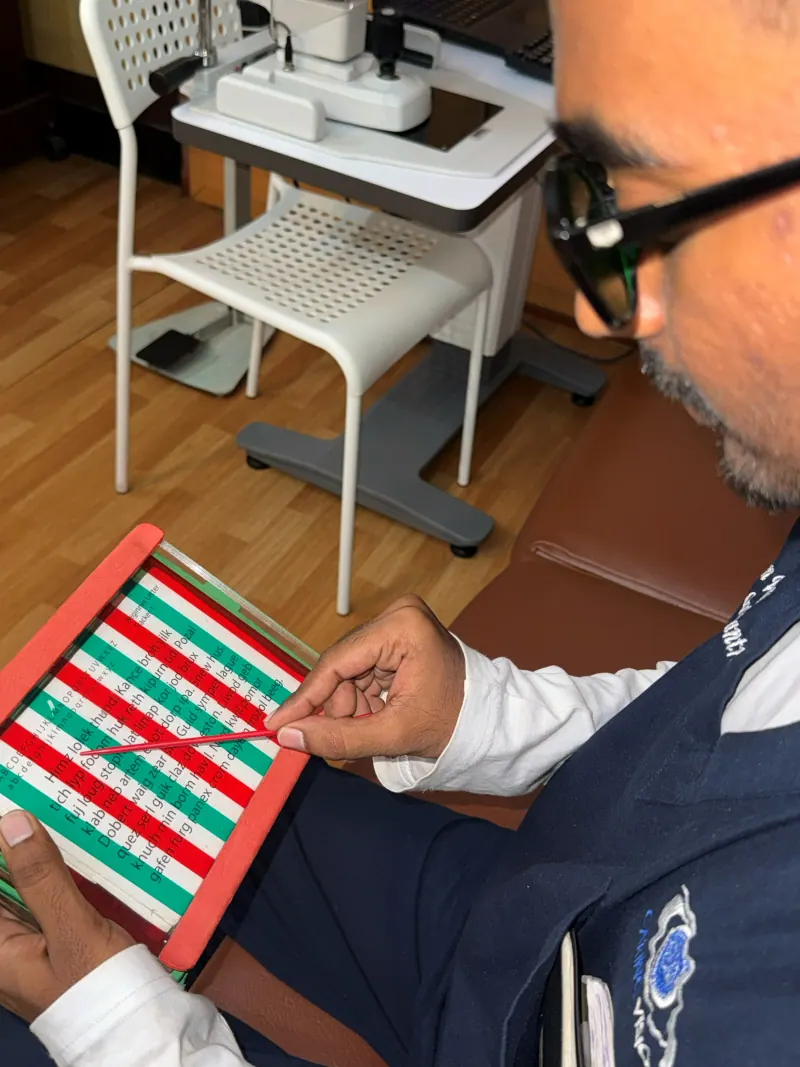
Patient holding a red-green fusion card during a lazy eye therapy exercise
Red-green cards show whether both eyes are contributing to one picture.

Amblyopia Treatment Options Compared

TreatmentWhat it doesUsually used for
GlassesGives the weaker eye a clear picture, often improving it on its ownEvery child and adult, always first
Eye patchingCovers the stronger eye so the brain must use the weaker oneChildren, mainly under 12
Atropine dropsBlurs the stronger eye for close work instead of a patchModerate lazy eye in children
Dichoptic therapyBoth eyes open, each sees part of a game, so suppression is trained awayChildren from about 4, teenagers and adults
Vision therapyBuilds eye teaming and depth perceptionWhen the eyes do not work as a pair
Squint surgeryStraightens a turned eye; does not improve visionLarge or constant eye turns only

Exercises on their own do not cure a lazy eye, but the right activities make treatment time count; see lazy eye exercises. For families who would rather avoid an eye patch, see lazy eye treatment without patching.

Want to know which treatment your child or you actually need? An assessment measures each eye and sets out a written plan.

Try It Yourself

What a Lazy Eye Sees

Choose the line the weaker eye can read, then switch views to see suppression and what a patch feels like.

6/18

Moderate lazy eye

Move the slider to compare the two eyes.

Stronger eye
Clear
Weaker eye
Blurred

With each eye tested on its own, the gap between them is what defines a lazy eye.

An illustration of blur and suppression, not a vision test. Only an eye examination can measure each eye.

Lazy Eye Treatment Changes With Age

The same lazy eye is treated differently at two, seven, fifteen and thirty. In babies the priority is removing anything that blocks vision; see signs of lazy eye in babies. In children, glasses, patching or drops and binocular games do most of the work; see lazy eye treatment for kids and the signs of lazy eye in children. Teenagers and adults rely more on binocular and dichoptic therapy; see lazy eye treatment for adults.

There is no fixed age after which treatment stops working, only a window that narrows. Our guide to the lazy eye treatment age limit explains what to expect at each age, and is lazy eye curable? covers the outcomes.

Try It Yourself

Slide to an Age

See how adaptable the visual brain usually is at that age and what treatment usually involves.

6 years
0 7 12 18 30 45 60 Most adaptable

Babies and toddlers, 0 to 2

What to expect
The visual brain is wiring itself at its fastest. A lazy eye is hard to spot from outside, but it can develop quickly, especially if something blocks the view.
What usually helps
Urgent treatment of any cataract or droopy eyelid, glasses where needed, and closely supervised patching.
Typical result
Very responsive once the cause is removed.
Signs of lazy eye in babies

Young children, 3 to 7

What to expect
The best window. Most lazy eyes are found now, at a first eye test or a school screening.
What usually helps
Full-time glasses, then patching or atropine drops for a few hours a day, with binocular games from about four.
Typical result
Most children reach normal or near-normal vision.
Lazy eye treatment for kids

Older children, 8 to 12

What to expect
Still a good window, especially if the lazy eye has never been treated before.
What usually helps
Glasses and patching or drops, often for longer, with binocular therapy to build eye teaming.
Typical result
Many children gain several lines on the chart.
Eye patching for lazy eye

Teenagers, 13 to 17

What to expect
Less adaptable, and patching that was tried in childhood often helps less a second time.
What usually helps
Binocular and dichoptic therapy carry more of the programme, with up-to-date glasses.
Typical result
Often a line or more, and more if never treated.
Dichoptic therapy for amblyopia

Adults, 18 and over

What to expect
The visual brain still adapts, but it needs a stronger, better-targeted signal. Suppression is the main obstacle.
What usually helps
Binocular and dichoptic therapy with in-clinic vision therapy, after the glasses are brought up to date.
Typical result
Commonly one to three lines, often with better depth perception.
Lazy eye treatment for adults

The curve is a simplified illustration of published findings. Individual results vary with the cause, the severity and earlier treatment.

Where to Get Lazy Eye Treatment in India

The treatments on this page are the same wherever you live. What changes is how you reach them. The measurements that set a plan, such as vision in each eye, suppression and depth perception, are taken in clinic. We see families at our clinics for lazy eye treatment in Chennai and lazy eye treatment in Hyderabad.

Families in other cities usually begin with an online consultation, then follow a monitored home programme with periodic in-clinic reviews. The local pages explain how that works for Delhi, Mumbai, Bangalore, Pune, Kolkata, Noida and Pondicherry. Fees are set out in lazy eye treatment cost in India.

  • In clinic: Chennai and Hyderabad
  • Online consultations across India
  • One written plan, re-measured at every review
Common Questions

Questions Families Ask

Is amblyopia the same as lazy eye?
Yes. Amblyopia is the medical name for lazy eye: reduced vision in one eye, or sometimes both, because the brain has not learnt to use it fully, even though the eye itself usually looks healthy. It is not the same as a squint, which is an eye that turns, although a squint is one of the common causes of amblyopia.
Can lazy eye be cured?
In most young children, vision in the weaker eye can be brought to normal or near normal, especially when treatment starts early and is completed. Older children and adults usually improve by a few lines rather than fully. About one child in four loses some vision after treatment stops suddenly, which is why it is tapered and reviewed.
What is the best treatment for lazy eye?
There is no single best treatment. Glasses always come first. After that, patching or atropine drops suit most young children, and binocular or dichoptic therapy suits older children, teenagers and adults, or anyone whose progress has stalled. The choice depends on age, the cause and how weak the eye is.
At what age is it too late to treat lazy eye?
There is no fixed age. Treatment works best before about seven, children up to 12 still respond well, and teenagers and adults can improve with binocular therapy, although the gains are usually smaller.
How long does lazy eye treatment take?
Many children improve within six to twelve weeks of patching. A typical binocular therapy course runs three to six months, and adult programmes usually run 24 to 40 weeks, with re-measurement at regular reviews.
Can lazy eye be treated without patching?
Yes. Atropine drops, blurring filters and binocular or dichoptic therapy are alternatives. Dichoptic therapy keeps both eyes open and trains the brain to stop suppressing the weaker eye.
How much does lazy eye treatment cost in India?
At Caring Vision Therapy the consultation is Rs 1,000 to Rs 2,000, with online consultations at the lower end. The programme is quoted in writing after the assessment, because it depends on age, severity and whether there is a squint.

Find Out How Much the Weaker Eye Can Gain

A lazy eye assessment measures the vision in each eye, checks for a squint and for suppression, and sets out a written plan. In clinic in Chennai and Hyderabad, with online consultations across India.

Vision Simulator