
Signs of Lazy Eye
in Children
Most children with a lazy eye look completely normal and never complain, because the good eye does all the work. The clues are in how they behave. Use the checklist, then try the cover test to see what an eye examination looks for.
What are the signs of lazy eye in children?
Common signs of lazy eye in children are an eye that turns in or out, closing or covering one eye, tilting the head, bumping into things on one side, misjudging steps or catches, and failing a school vision screening. Many children show no sign at all, so a full eye examination by age three to four is the only reliable check.
- Affects about
- 2 to 3 children in every 100
- Visible from outside?
- Usually not
- First full exam
- By age 3 to 4
- Main risk factors
- Squint, family history, prematurity
Lazy Eye Checklist for Parents
Tick anything you have noticed. The result updates as you go. Nothing is stored or sent.
A checklist for conversation, not a diagnosis. Many children with a lazy eye show no sign, so a full eye examination is the only reliable check.
Why Children With Lazy Eye Do Not Complain
A child with one weak eye has never known anything different. The stronger eye gives a clear picture, the brain quietly ignores the blurred one, and life feels normal. Reading, TV and play all look fine with one good eye.
That is why lazy eye is so often found by accident: at a school screening, at a check-up for something else, or when a parent covers one eye in fun and the child suddenly objects. If your child is under three, the signs are different; see signs of lazy eye in babies.
The Cover Test, Step by Step
Choose a situation, then cover one eye at a time. Watch the uncovered eye, and the child's reaction.
Squint: the right eye turns in
Uncovered, the left eye looks at the toy and the right eye points in towards the nose. Cover the left eye and watch the right eye.
A simplified animation of what an examiner looks for. A real cover test is done by a trained clinician.
How Lazy Eye Is Diagnosed
Lazy eye is diagnosed when, with the best possible glasses, one eye reads at least two lines less than the other and no eye disease explains the difference. A full examination includes:
- Vision in each eye separately, with age-appropriate charts or pictures
- A cover test for squint, including small or intermittent ones
- The true prescription, measured with focus-relaxing drops
- Tests of suppression and depth perception
- A health check of the front and back of each eye
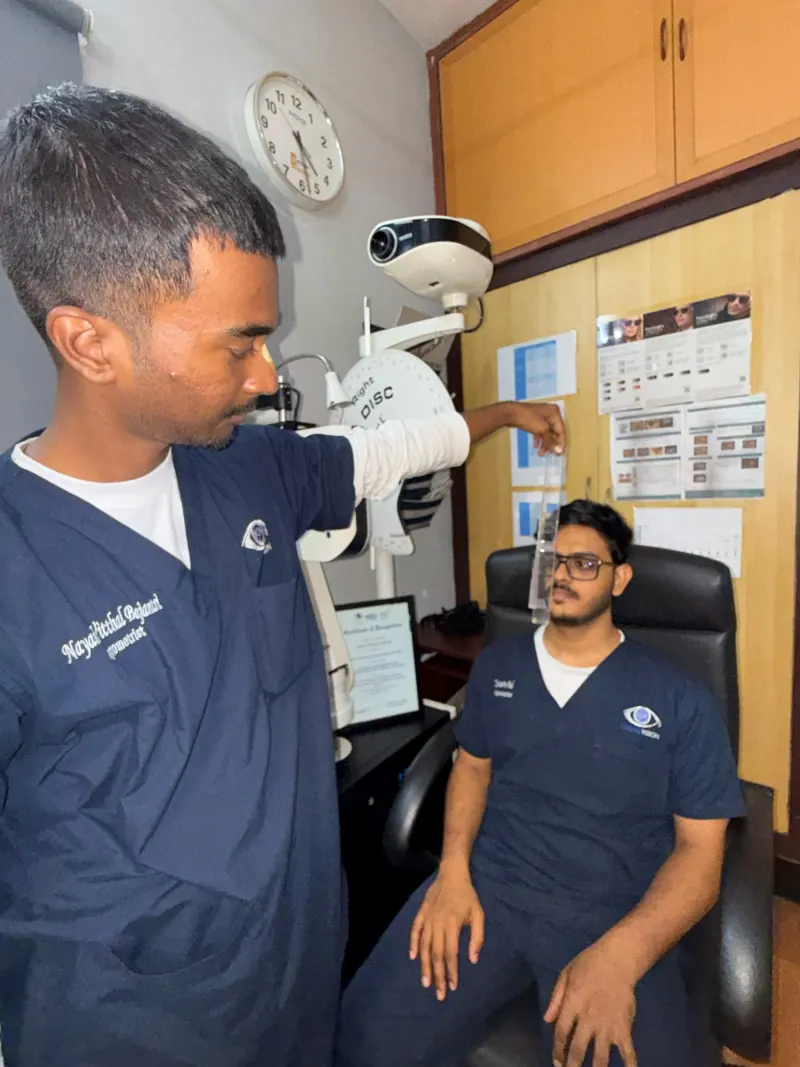
Ticked something on the checklist? A children's eye assessment measures each eye separately and gives you a clear answer.
When to See an Eye Specialist
Book an eye examination if any item on the checklist applies, if there is a family history of lazy eye or squint, or if your child has never had a full examination by age four. Go the same week if you notice a white or cloudy pupil, a new eye turn, or an eyelid drooping over the pupil.
After a diagnosis, our guides to lazy eye treatment for kids and the types of amblyopia explain what comes next. For other vision problems that affect schoolwork, see signs of vision problems in kids.
Everything We Have Written on Lazy Eye
Back to the overview: amblyopia (lazy eye) treatmentBy age
- Lazy eye treatment for kids
- Lazy eye treatment for adults
- Lazy eye treatment age limit
- Signs of lazy eye in children
- Signs of lazy eye in babies
Treatments
Common questions
Parent Guides on This Topic
- Spotting lazy eye in a baby The age-by-age warning signs from newborn to three years, and why a school screening will not find them.
- Can lazy eye actually be cured? What the success rates look like by age, and why binocular therapy outperforms patching alone.
- Patching versus vision therapy Why amblyopia often returns after patching stops, and what treating the suppression instead involves.
- Lazy eye treatment, step by step Glasses, patching, drops and binocular therapy in the order they are used, with a tool to see which fit your child.
Questions Families Ask
How can I check my child for lazy eye at home?
At what age does lazy eye show up?
Can a child have lazy eye with straight eyes?
Is a head tilt a sign of lazy eye?
Does lazy eye run in families?
What happens if lazy eye is not treated?
Get a Clear Answer About Your Child's Eyes
A lazy eye assessment measures the vision in each eye, checks for a squint and for suppression, and sets out a written plan. In clinic in Chennai and Hyderabad, with online consultations across India.