What form deprivation amblyopia is, how congenital cataract, ptosis and other conditions can affect vision development, and why early treatment matters.
Book a ConsultationWhat Is Form Deprivation Amblyopia?
What form deprivation amblyopia is, how congenital cataract, ptosis and other conditions can affect vision development, and why early treatment matters.
A child's visual system does not develop simply because the eyes are present - it develops through experience. During the earliest years of life, the brain is learning how to interpret what the eyes send it, and for that to happen normally, it needs a reasonably clear, usable image from both eyes. When one or both eyes are deprived of clear visual input during this critical window - because of a congenital cataract, severe corneal opacity, significant ptosis, or another cause of visual obstruction - the brain may not receive the stimulation it needs. The result can be form deprivation amblyopia: one of the more serious forms of amblyopia, because the problem is not simply an eye with the wrong spectacle power, it is a developing visual system that has been deprived of an adequately formed image. Early recognition and treatment matter enormously.
What Is Amblyopia?
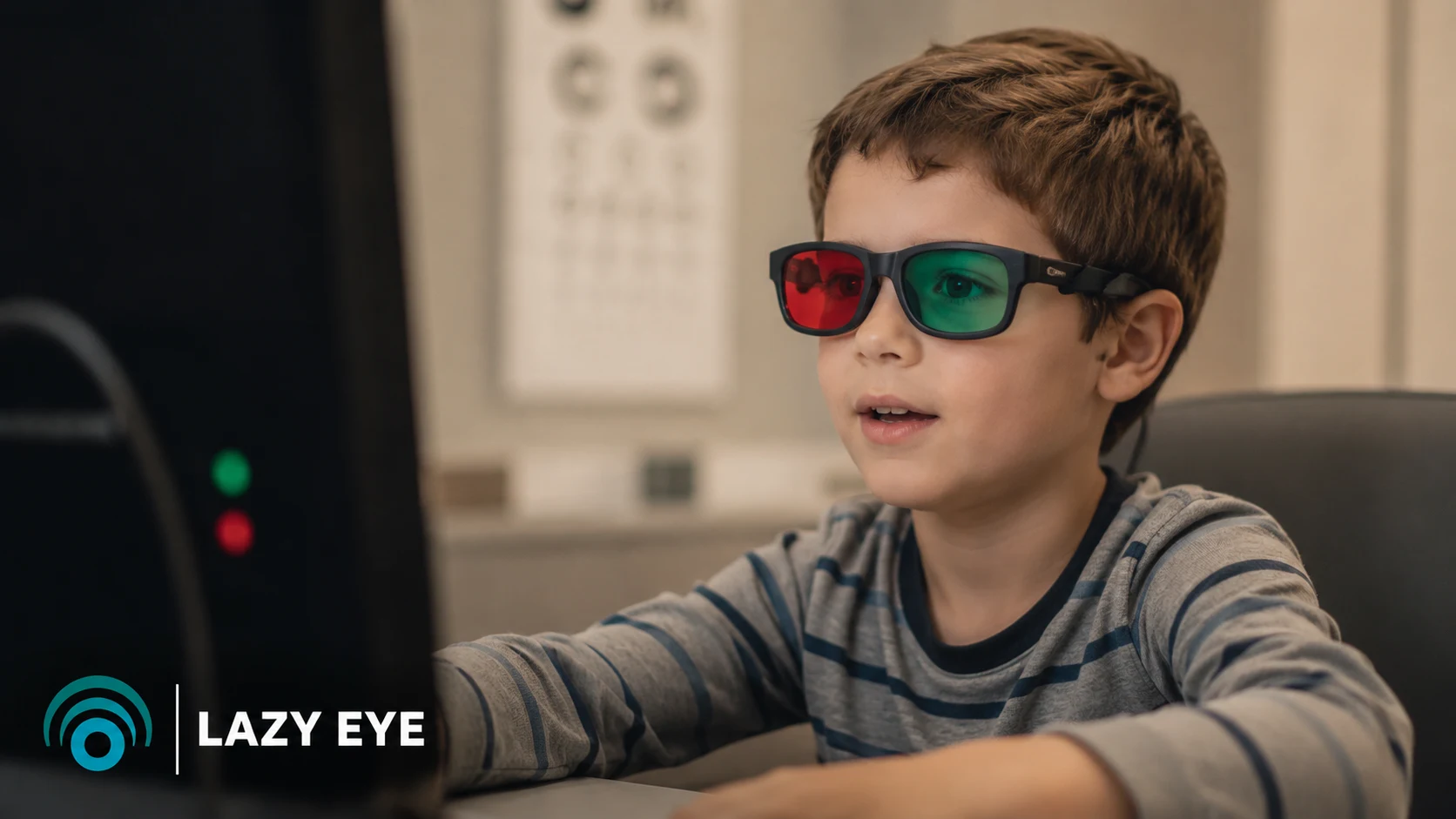
Amblyopia, commonly called "lazy eye," is a developmental reduction in vision that occurs because the visual system did not receive or process normal visual information during early childhood. The eye itself may look structurally normal - the problem is that the brain never developed normal visual processing for it. In simple terms: the eye sends information, the brain receives it, and the brain learns to interpret it. When clear visual information is significantly reduced during this important developmental window, the brain may not develop normal visual function for that eye.
What Is Form Deprivation Amblyopia Specifically?
Form deprivation amblyopia occurs when the visual system is deprived of a clear retinal image during early development - the normal visual "form" reaching the retina is obstructed or severely degraded. Possible causes include congenital cataract, significant corneal opacity, severe ptosis obstructing the visual axis, vitreous opacity, retinal abnormalities, and other conditions that prevent a clear image reaching the retina. The exact cause varies from child to child; the common thread is that adequate visual information simply is not reaching the developing visual system.
Why Early Childhood Matters So Much
Early development is when the visual system is most responsive to visual experience - the brain is rapidly building the neural pathways for visual acuity, binocular vision, depth perception, contrast sensitivity, visual perception and eye-hand coordination. If one eye receives a substantially poorer image than the other during this window, the brain tends to rely more heavily on the better eye, and the pathway for the deprived eye may not develop normally over time, which is exactly why early diagnosis and treatment are so important.
Why Treating the Eye Is Only the First Step
It is tempting to assume that once the physical obstruction is removed, vision should return to normal. Unfortunately, that is not always the case. Consider a child who has had a dense congenital cataract: even once the cataract is treated, the brain has already experienced a prolonged period of inadequate visual stimulation. The problem is therefore not only the physical obstruction itself - the developing visual system has also been affected, which is why children with early visual deprivation often need ongoing visual rehabilitation and monitoring even after the underlying eye condition has been treated. Depending on the child's needs, clinicians may continue to monitor and support visual acuity, fixation, binocular function, eye movements, depth perception, visual attention, spatial awareness and eye-hand coordination well after the initial treatment.
Common Causes of Form Deprivation
Congenital Cataract
A cataract present at birth or developing early in life can significantly reduce the quality of the image reaching the retina. When a visually significant cataract is present during early development, prompt ophthalmic management is essential.
Severe Ptosis
A drooping upper eyelid may occasionally cover the pupil or interfere significantly with the visual axis. Not every child with ptosis develops amblyopia - the risk depends on severity, duration, and whether the visual axis is actually affected.
Corneal Opacity and Other Media Opacities
A significant corneal scar or opacity can interfere with light passing through the eye and reduce image quality, as can other problems involving the structures light must pass through before reaching the retina.
Retinal or Other Ocular Conditions
Certain retinal or structural abnormalities can also significantly reduce the quality of visual information reaching the developing brain.
Signs Parents May Notice
Young children rarely complain about poor vision - they simply assume the way they see is normal, since they have no comparison. Parents are more likely to notice behavioural clues: one eye turning inward or outward, difficulty fixing or following objects, poor visual attention, bumping into objects, difficulty reaching accurately, closing one eye in bright light, head tilting or an unusual head position, difficulty recognising objects visually, or poor hand-eye coordination. These signs are not specific to form deprivation amblyopia, and a child can have significant visual impairment without showing obvious symptoms at all, which is why early childhood eye examinations matter, particularly when an eye condition is suspected.
Can It Affect Both Eyes?
Yes. Although amblyopia is often discussed in relation to one eye, significant visual deprivation can affect either or both eyes depending on the underlying condition. A bilateral condition that severely reduces visual input to both eyes during early development can interfere with overall visual development, and the clinical presentation in that case looks different from typical one-eye amblyopia.
Form Deprivation vs Refractive Amblyopia
These are related but distinct. Refractive amblyopia occurs when the visual image is blurred by an uncorrected refractive error - significant hyperopia, myopia, astigmatism or anisometropia. Form deprivation amblyopia occurs when the image is significantly reduced or blocked by an ocular condition interfering with visual input, such as congenital cataract, severe corneal opacity or significant ptosis. Form deprivation amblyopia can be particularly serious because the developing visual system may receive very little useful visual stimulation at all, rather than simply a blurred one.
What Does Treatment Involve?
Treatment depends heavily on the cause, the child's age, and the severity of the deprivation. The first priority is generally identifying and addressing the cause itself, which may involve medical or surgical treatment, removal of the obstruction, appropriate spectacle correction, contact lenses in selected cases, occlusion therapy, penalisation in selected cases, visual rehabilitation, and ongoing monitoring of visual development. A visually significant congenital cataract, for example, typically requires timely surgical management by a paediatric ophthalmologist - the exact plan has to be set by the treating ophthalmic team.
Occlusion Therapy (Patching)
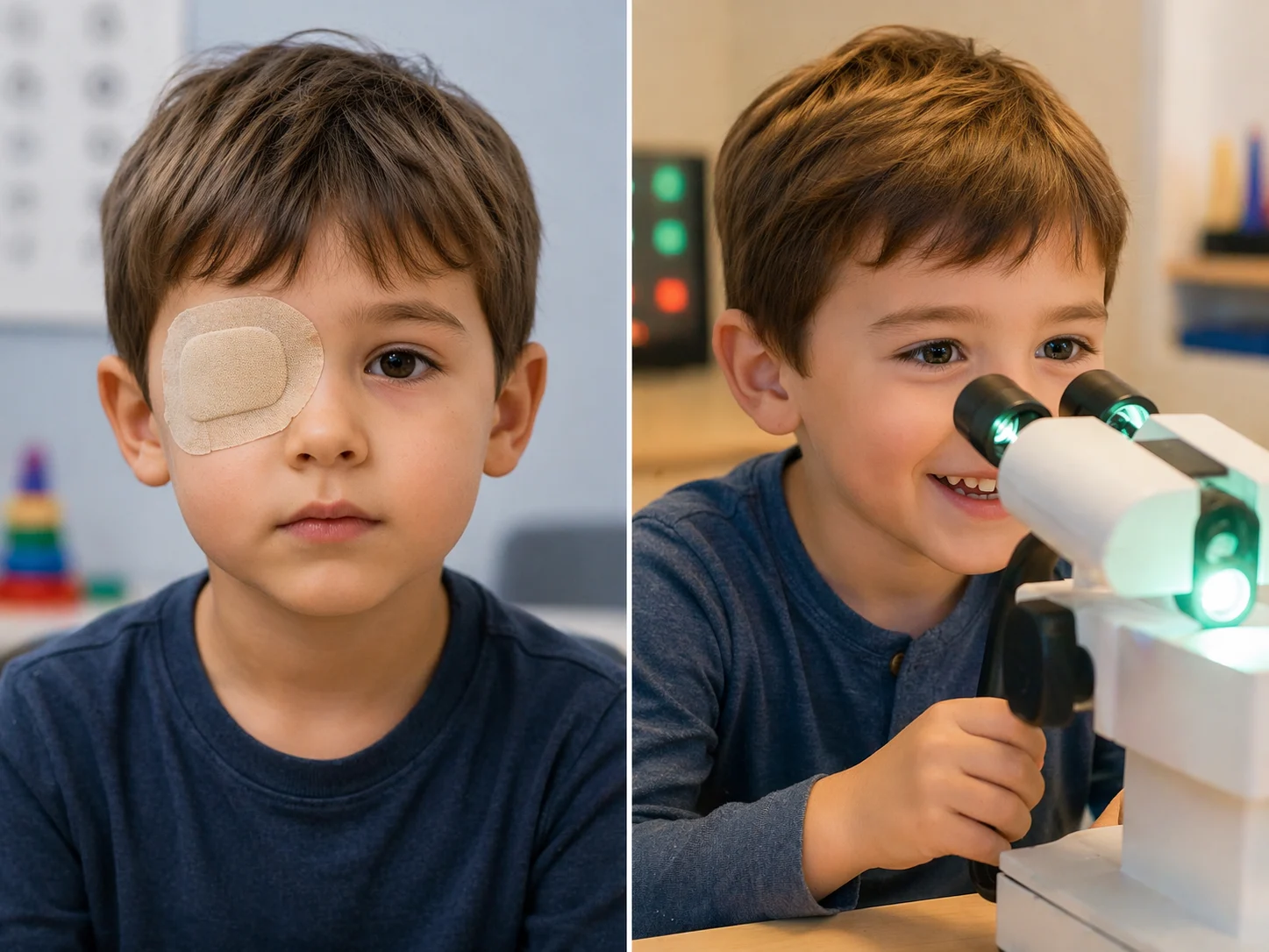
In appropriate cases, the better-seeing eye is covered for a prescribed period to encourage the child to use the amblyopic eye. The purpose is not simply to "strengthen" the weaker eye - it is to encourage the brain to actually use and process information coming from it. The amount and duration of patching should always be prescribed by the treating clinician, and it is not appropriate for every child, particularly when the underlying cause of poor vision has not yet been adequately addressed.
Why Spectacles Can Still Matter Afterwards
Even once the underlying cause has been treated, a child may still have a significant refractive error, and appropriate optical correction helps ensure the clearest possible image reaches the retina, especially important while the visual system is still developing. Regular monitoring of refraction and visual acuity is usually an important ongoing part of management.
Can Vision Therapy Help Form Deprivation Amblyopia?
Vision therapy cannot remove a cataract, clear a corneal opacity, or replace appropriate ophthalmic treatment for an ocular disease - the underlying cause must be addressed first. Once the eye has an appropriate optical pathway and the child is medically stable, selected visual rehabilitation approaches may support functional visual skills such as fixation, eye movements, binocular coordination, spatial awareness, visual-motor integration, depth perception, visual attention, and functional use of the affected eye. This kind of intervention complements ophthalmic management - it does not replace it.
What Happens If Treatment Is Delayed?
The developing visual system is particularly sensitive during early childhood, and prolonged deprivation can lead to more significant, more persistent visual deficits. Visual recovery depends on several factors: the age when deprivation occurred, how long it lasted, the severity of the obstruction, whether one or both eyes were affected, the underlying ocular condition, how promptly treatment began, the quality of the visual image once treated, adherence to the prescribed treatment, and individual neurological and visual factors. Earlier recognition generally offers a better opportunity to support normal visual development, though every child's prognosis should be discussed directly with the treating clinical team.
Why Binocular Vision Still Matters After Treatment
Good vision is not only about seeing clearly with each eye separately - the brain also has to combine information from both eyes to build stereopsis, depth perception, accurate spatial judgement and comfortable binocular vision. When one eye has experienced prolonged deprivation, binocular development can be affected even after visual acuity has improved, which is exactly why assessment should never stop at the eye chart.
What Parents Can Do
Parents play a genuinely important role in supporting treatment: following the ophthalmologist's treatment plan closely, attending every follow-up appointment so development can be monitored over time, encouraging age-appropriate visual activities such as drawing, puzzles, ball games, construction play and reading when appropriate for the child's visual ability, and reporting changes such as increased eye turning, new head postures, difficulty seeing, closing one eye, or any regression in visual behaviour. It also helps to avoid comparing one child's progress to another's - visual development varies considerably, and progress should be judged against the child's own baseline and clinical findings.
When Should a Child Be Evaluated?
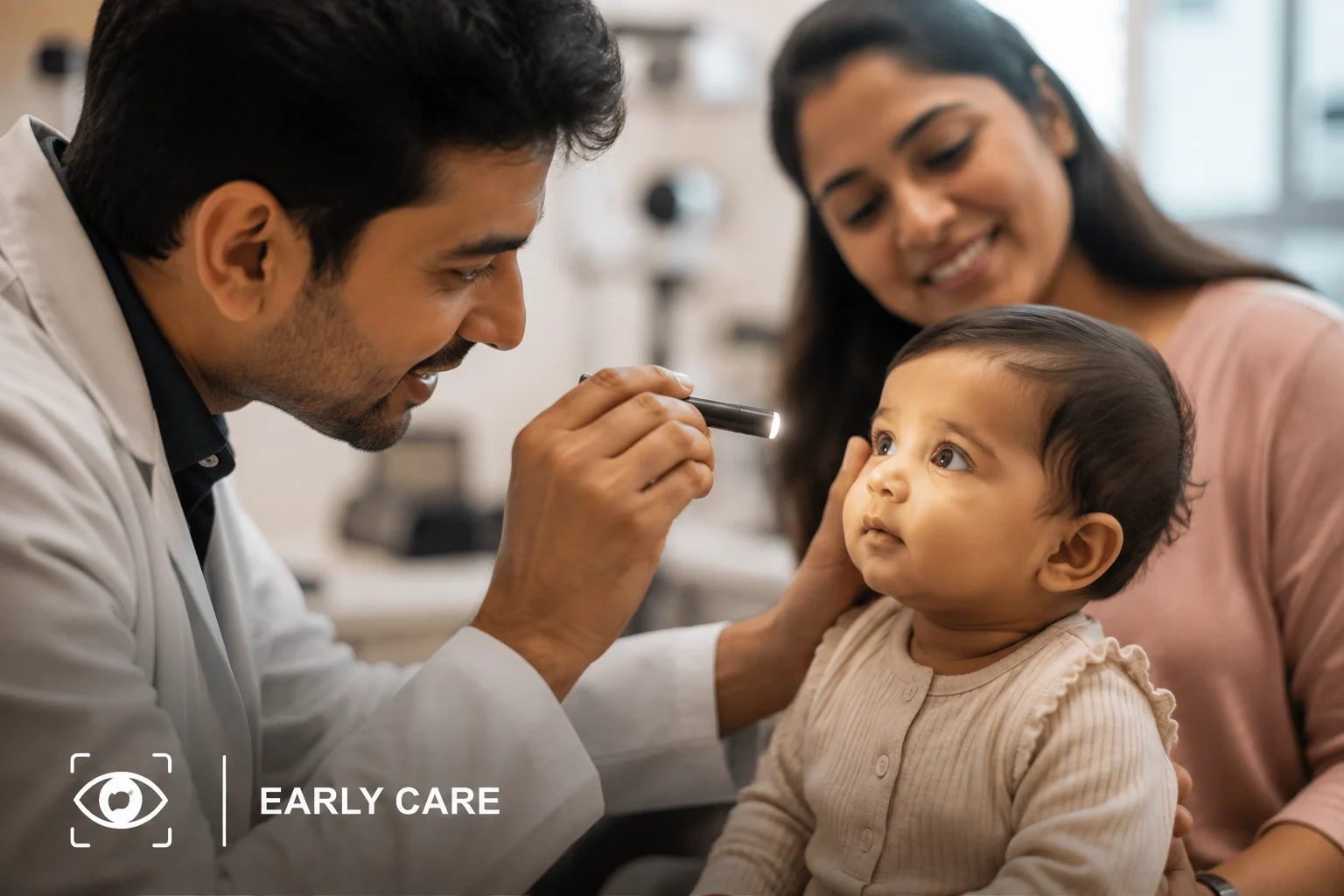
Any suspected obstruction of the visual axis in an infant or young child deserves prompt ophthalmic attention. Seek professional evaluation for a white or unusual-looking pupil, an eye that consistently turns, a drooping eyelid covering the pupil, cloudiness of the cornea, unusual eye movements, poor fixation, failure to visually follow objects, an apparent difference in vision between the eyes, or significant difficulty using vision generally. Some of these conditions are genuinely time-sensitive - do not wait for a child to complain about poor vision, because young children usually cannot recognise or describe visual loss themselves.
At Caring Vision, we believe children's vision should be considered in terms of both visual clarity and functional visual development - a child does not simply need to pass the eye chart, they need to use their vision to explore, learn, move, play, read and understand the world around them. When vision is threatened early in life, early action makes a meaningful difference. If you have concerns about your child's early visual development, book a comprehensive paediatric vision assessment at Caring Vision Therapy.
Explore More at Caring Vision Therapy
Frequently Asked Questions
What is form deprivation amblyopia?
Form deprivation amblyopia is reduced visual development caused by significant deprivation of a clear visual image during early childhood.
What causes form deprivation amblyopia?
Causes can include congenital cataract, severe corneal opacity, significant ptosis and other conditions that interfere with the visual axis or substantially reduce visual input.
Is form deprivation amblyopia the same as lazy eye?
Amblyopia is commonly called lazy eye, but the term can be misleading. Form deprivation amblyopia is a developmental visual problem resulting from inadequate visual input during early development.
Can cataracts cause amblyopia in children?
Yes. A visually significant congenital or early-onset cataract can prevent adequate visual stimulation and may result in amblyopia if not appropriately managed.
Can ptosis cause amblyopia?
Significant ptosis can increase the risk of amblyopia if the drooping eyelid interferes substantially with the visual axis or is associated with other visual problems.
Can form deprivation amblyopia be treated?
Treatment depends on the cause and may involve management of the underlying eye condition, appropriate optical correction, amblyopia therapy and monitoring of visual development.
Does patching help form deprivation amblyopia?
Patching may be prescribed in selected cases to encourage use of the weaker eye. It should be undertaken only under appropriate clinical guidance.
Is early treatment important?
Yes. Early childhood is a particularly important period for visual development, and prolonged deprivation can result in more persistent visual deficits.