A parent's guide to what happens after congenital cataract surgery in children - optical correction, patching, follow-up and binocular vision recovery.
Book a ConsultationWhat Happens After Congenital Cataract Surgery?
A parent's guide to what happens after congenital cataract surgery in children - optical correction, patching, follow-up and binocular vision recovery.
For a parent, the moment a paediatric ophthalmologist confirms that a congenital cataract has been successfully removed can feel like the end of a frightening chapter. In reality, it is closer to the beginning of one. Surgery restores a clear optical pathway to the retina, but it does not, by itself, restore normal vision. The brain still has to learn how to use that newly clear image, and that process is what determines how much functional vision a child ultimately regains.
Surgery Removes the Obstruction. It Doesn't Restore Vision by Itself.
This is the single most important thing for parents to understand early. A dense congenital cataract blocks or severely degrades the visual information reaching the eye during exactly the period when the brain is building its core visual pathways. Removing the cataract restores the physical opportunity for a clear image to reach the retina, but if the brain went through a stretch of inadequate visual stimulation beforehand, it does not automatically switch on normal processing the moment the obstruction is gone. This is amblyopia in its most direct form: a developmental problem in how the brain uses visual information, not just a problem with the eye's optics.
Why the Brain Needs Rehabilitation, Not Just the Eye
Think of it this way: the eye is the camera, but the brain is what develops the film. Surgery fixes the camera. Everything after surgery - optical correction, patching, monitoring, and in many cases targeted visual rehabilitation - is aimed at helping the brain build and strengthen the neural pathways it did not get the chance to build normally before surgery. Skipping this phase, or treating the surgery date as the finish line, is one of the most common reasons a child's visual outcome falls short of what was actually achievable.
What Typically Happens in the First Few Months
Optical Correction Comes First
Most children need an updated spectacle prescription or, in selected cases, a contact lens immediately after surgery, because removing the cataract changes the eye's focusing power substantially. Getting this correction accurate, and keeping it accurate as the child grows, is the foundation everything else is built on. A blurred image, even from a technically successful surgery, will not give the brain what it needs.
Patching Usually Begins Soon After
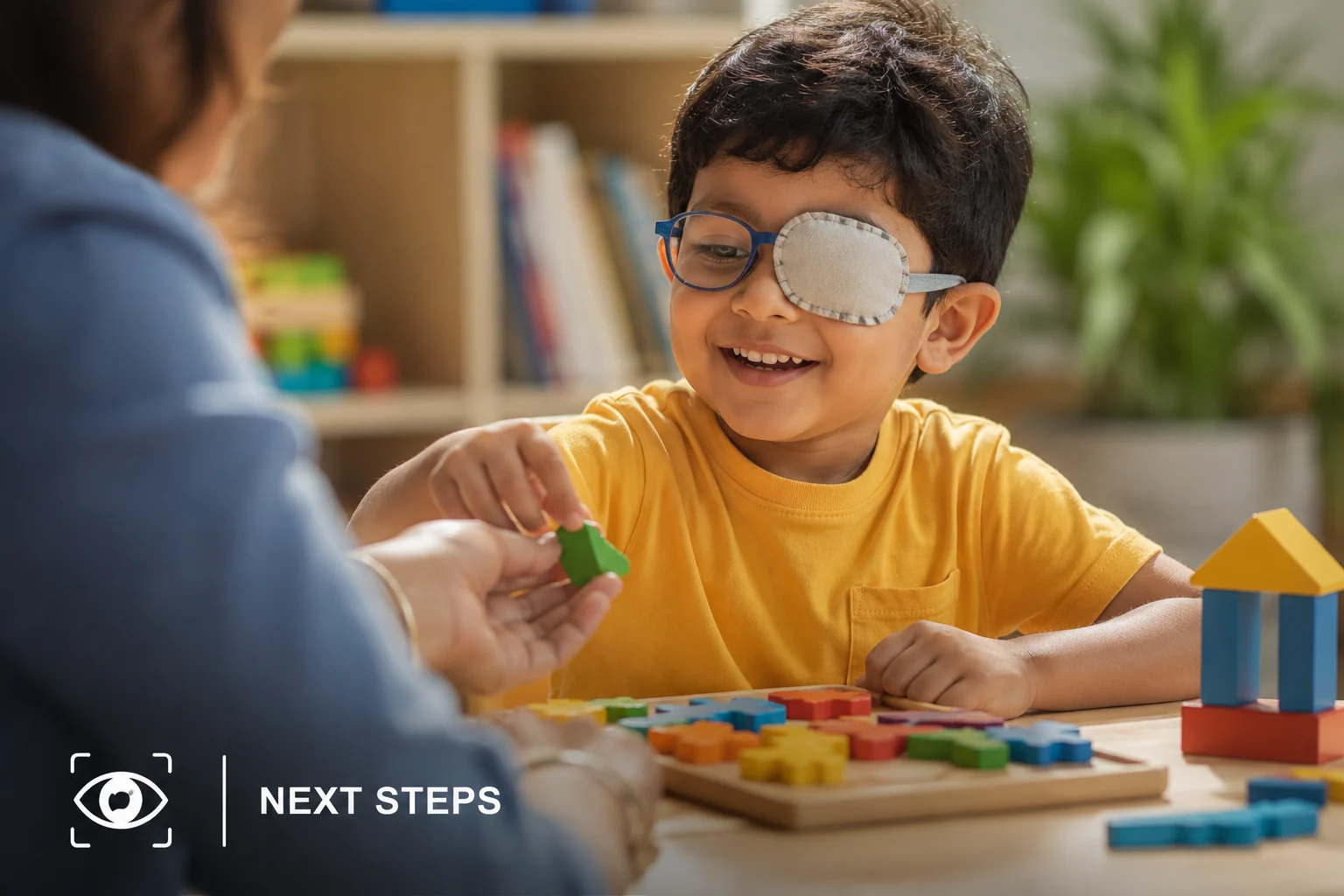
Once the optics are sorted, the ophthalmologist typically prescribes a patching schedule for the stronger eye, forcing the brain to rely on, and therefore start developing, the eye that was deprived before surgery. The exact number of hours, and how the schedule changes over time, depends entirely on the child's age, how severe the deprivation was, and how the eye responds, and should always be set and adjusted by the treating ophthalmologist rather than by generic advice.
Making Patching Actually Work at Home
Patching sounds simple on paper and is often genuinely difficult in practice, especially with toddlers and young children who understandably resist having a patch placed over their better eye. A few things tend to make the biggest practical difference: building patch time into a fixed daily routine rather than an unpredictable one, using the patched hours for close, visually engaging activities - drawing, puzzles, building blocks, picture books - rather than passive screen time, praising and rewarding the behaviour rather than the discomfort, and tracking actual hours honestly rather than estimating, since under-patching is one of the most common, and most fixable, reasons progress stalls. If a child consistently fights the patch to the point where compliance is genuinely poor, that is worth raising with the treating team directly rather than quietly giving up - there are often alternative approaches, including atropine penalisation in selected cases, that can be considered.
What Progress Looks Like - and What It Doesn't
Improvement after early cataract surgery and amblyopia treatment is rarely a straight line. Visual acuity in the treated eye typically improves gradually over months, not days, and progress can plateau for a period before improving again. What matters clinically is the trend over successive follow-up visits, not any single measurement in isolation. Parents sometimes worry unnecessarily when a single visit shows little change, or conversely assume treatment is "done" after one good result - both reactions are understandable, and both are reasons regular, scheduled follow-up with the treating team matters more than any one appointment.
Warning Signs to Report Immediately
Between scheduled visits, contact the treating team promptly if you notice increased eye turning, a new head tilt or unusual head posture, sudden apparent loss of vision, redness, pain, or the eye consistently closing or being covered outside of prescribed patching. These can occasionally signal a separate complication that needs earlier attention than the next routine follow-up.
Binocular Vision: The Part That's Easy to Miss
It is possible for a child's visual acuity to improve substantially in the treated eye while binocular vision - how well the two eyes work together as a team - remains underdeveloped, because the two are not the same thing. Depth perception, comfortable eye teaming and spatial judgement all depend on binocular coordination, not on the acuity of either eye alone. This is why assessment should not stop once the eye chart numbers look acceptable, and why some children benefit from targeted binocular vision support even after their acuity has largely recovered.
Why This Is a Years-Long Process, Not a One-Time Fix
Visual development continues well into the school years, and children treated for form deprivation amblyopia in infancy typically need continued monitoring, and sometimes continued treatment, through early and middle childhood, not just in the months immediately after surgery. Refractive changes as the eye grows, the ongoing need to protect against the stronger eye becoming dominant again, and the gradual nature of binocular development all mean that regular follow-up is not overcaution - it is how the gains from surgery are actually protected over time.
Building the Right Care Team
The best outcomes tend to come from close coordination between the paediatric ophthalmologist managing the surgical and medical side, and, where indicated, a vision therapy or paediatric optometry team supporting the functional rehabilitation side - patching compliance, binocular vision development, and the visual skills a child needs for school. These roles are complementary, not competing, and parents should feel comfortable asking either team how the two are coordinating on their child's specific case.
Caring Vision's Role Alongside Your Ophthalmologist
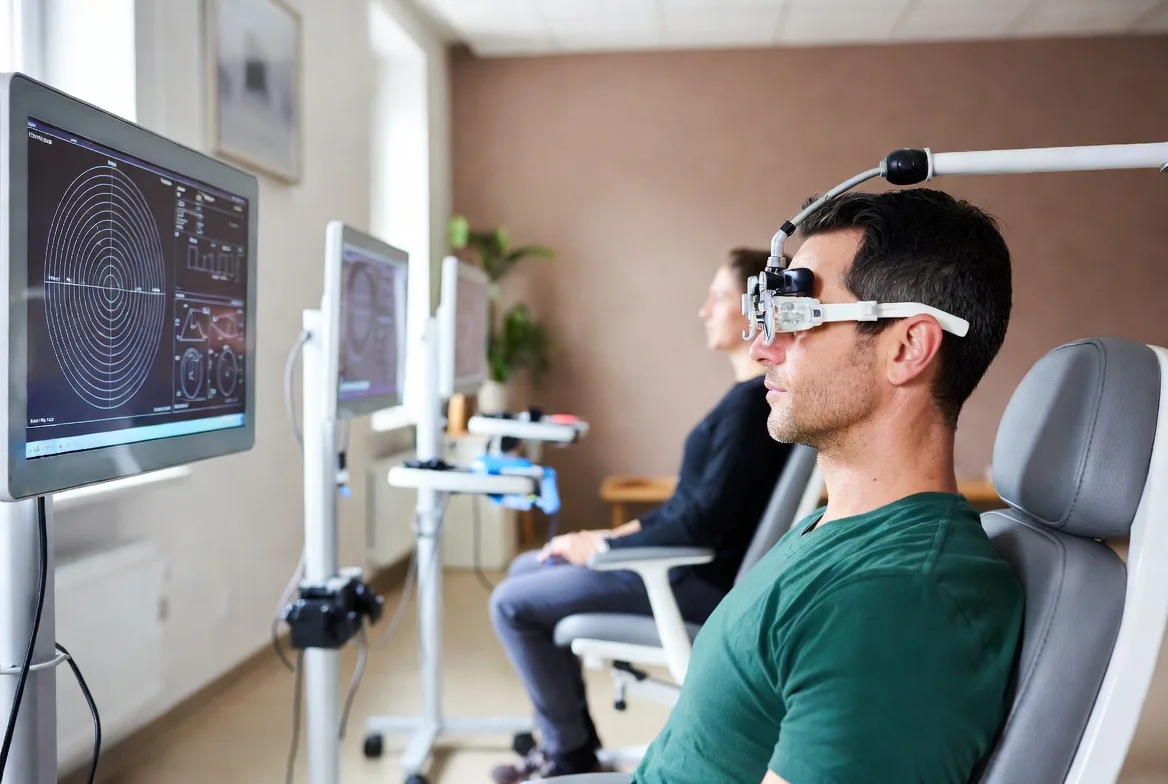
At Caring Vision, we work alongside, not instead of, the ophthalmic team managing a child's surgical care. Once the underlying eye condition has been treated and the child is medically stable, our role is to support the functional side of recovery: monitoring fixation, eye movements, binocular coordination and visual-motor skills, and providing structured visual rehabilitation where it is clinically indicated. If your child has had, or is due to have, congenital cataract surgery and you want to understand what functional support looks like alongside the surgical treatment plan, book a paediatric vision assessment with our team.
Explore More at Caring Vision Therapy
Frequently Asked Questions
How soon after cataract surgery does patching usually start?
Patching is typically introduced once the child's optical correction (glasses or a contact lens) is in place, so the eye is receiving the clearest possible image before it is asked to do the extra work of patching. The exact timing and schedule should be set by the treating paediatric ophthalmologist based on the individual case.
Why does my child still need glasses after cataract surgery?
Removing the cataract changes the eye's focusing power substantially, and most children need an updated spectacle prescription, or in selected cases a contact lens, to bring the image reaching the retina into clear focus. This optical correction is the foundation that patching and other treatment build on.
What if my child won't tolerate the eye patch?
Resistance to patching is common, especially in toddlers. Building patch time into a fixed daily routine, using close visually engaging activities during patched hours, and rewarding cooperation can help. If compliance remains genuinely poor, raise it with the treating team directly, since alternative approaches may be considered.
Is it normal for progress to plateau between visits?
Yes. Improvement after cataract surgery and amblyopia treatment is rarely a straight line, and progress can plateau for a period before improving again. What matters clinically is the trend over successive follow-up visits rather than any single measurement.
Can my child have good visual acuity but still have poor depth perception?
Yes. Visual acuity in the treated eye can improve substantially while binocular vision, how well the two eyes work together as a team, remains underdeveloped, since the two are not the same thing. This is why assessment should not stop once the eye chart numbers look acceptable.
How long does treatment typically continue after surgery?
Visual development continues well into the school years, and children treated for form deprivation amblyopia in infancy typically need continued monitoring, and sometimes continued treatment, through early and middle childhood, not just in the months immediately following surgery.