Pediatric Care

How Vision Therapy Helps Children with Learning Difficulties

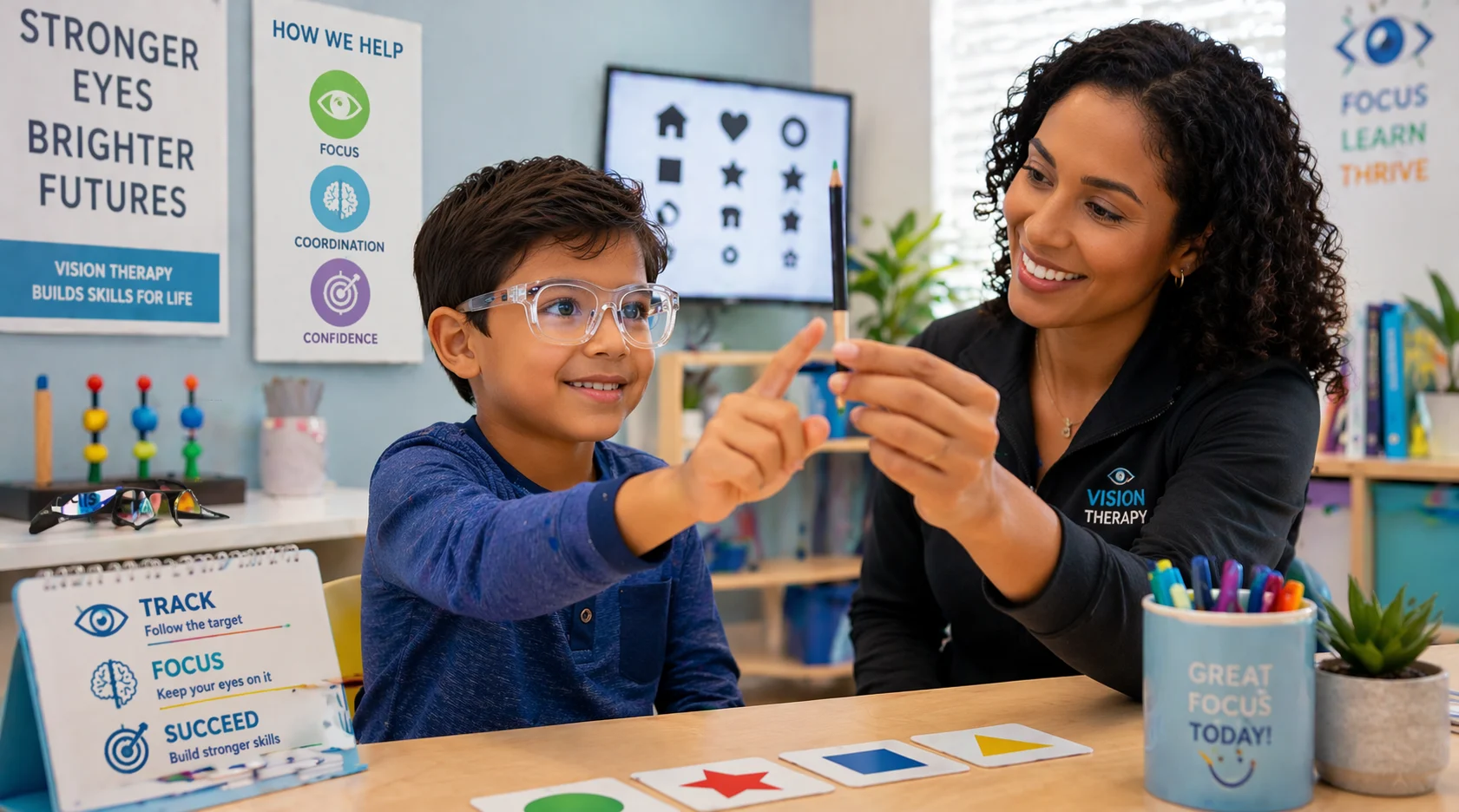
Child receiving vision therapy for learning-related visual problems
Quick Answer

How vision therapy addresses learning difficulties in children: eye tracking problems, focusing issues, visual processing disorders. Clinical insights from Chennai specialists.

Book a Consultation

What is Pediatric Care?

How vision therapy addresses learning difficulties in children: eye tracking problems, focusing issues, visual processing disorders. Clinical insights from Chennai specialists.

Many children who struggle with reading, attention, and learning have underlying functional vision problems that go undetected in standard eye exams. These visual inefficiencies can significantly impact academic performance, even when a child has 20/20 visual acuity.

Approximately 80% of learning is visual. When the visual system doesn't function efficiently, children may experience difficulty with reading fluency, comprehension, handwriting, copying from the board, and sustained attention during visual tasks.

Common Vision-Related Learning Symptoms

  • Skipping words or lines when reading
  • Using a finger to track text
  • Poor reading comprehension despite strong decoding skills
  • Frequent headaches or eye strain during homework
  • Short attention span for near work
  • Difficulty copying from the board
  • Letter or word reversals beyond age 7

How Vision Therapy Addresses Learning Challenges

Vision therapy improves the underlying visual skills needed for efficient learning. Treatment focuses on several key areas:

Eye Tracking (Oculomotor Skills)

Smooth, accurate eye movements are essential for reading. Vision therapy trains the eyes to move efficiently across text, reducing skipping and re-reading. Improved tracking directly impacts reading speed and accuracy.

Eye Teaming (Binocular Vision)

When both eyes don't work together properly, children may experience double vision, visual fatigue, or difficulty sustaining attention. Therapy strengthens eye coordination and reduces visual stress, making sustained reading more comfortable.

Focusing (Accommodation)

The ability to quickly and accurately focus between near and far distances is critical for classroom learning. Vision therapy improves focusing flexibility and stamina, helping children maintain clear vision throughout the school day.

Visual Processing

Visual processing involves how the brain interprets what the eyes see. Therapy can improve visual memory, spatial awareness, and visual-motor integration - skills essential for reading, writing, and mathematics.

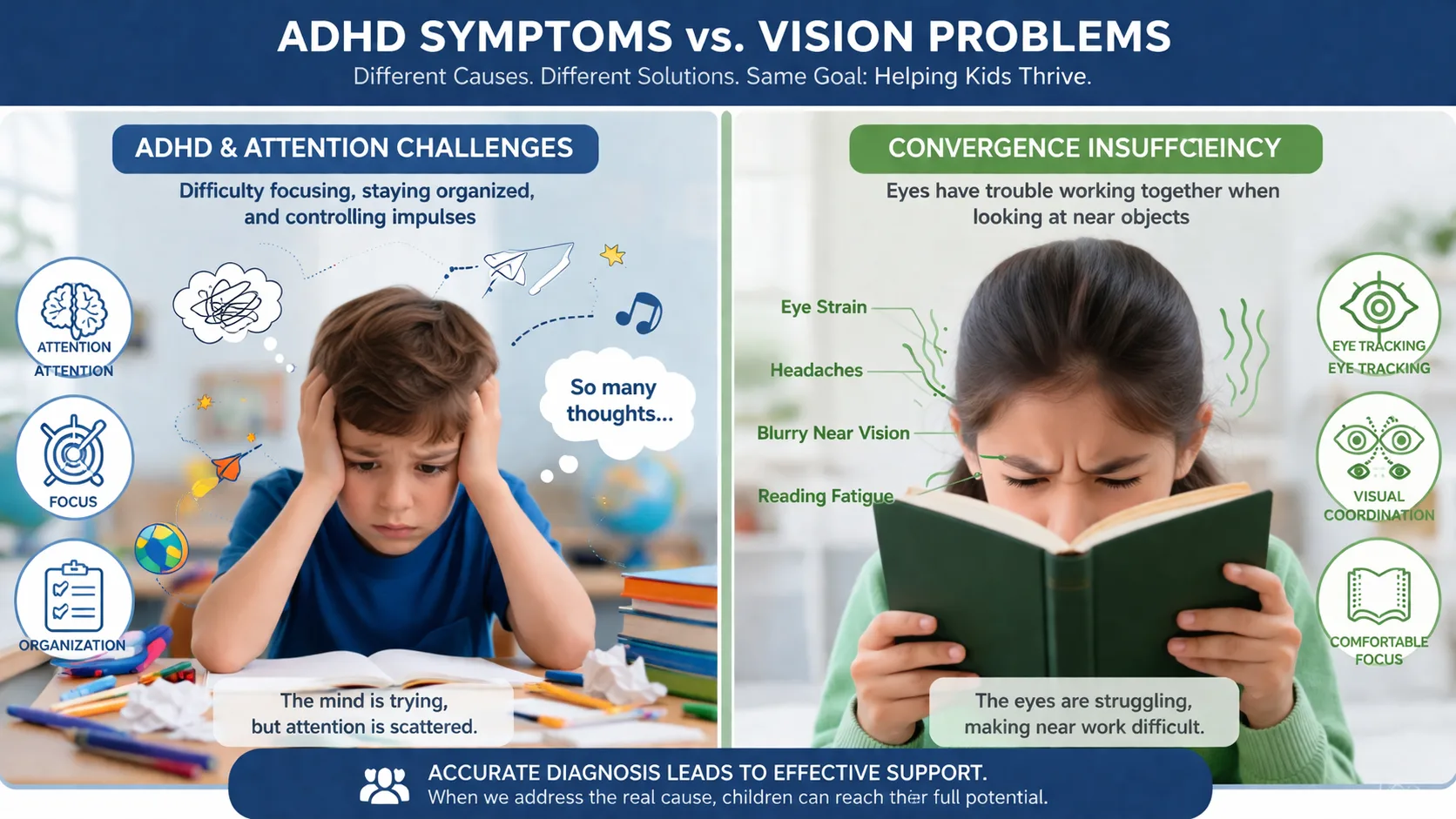
Is Vision Therapy a Cure for Dyslexia or ADHD?

Vision therapy does not cure dyslexia or ADHD. However, it can address co-occurring visual inefficiencies that make learning more difficult. Many children with these diagnoses also have functional vision problems that, when treated, allow them to engage more effectively with educational interventions.

When to Seek an Evaluation for Your Child

If your child struggles academically despite strong intelligence and effort, avoids reading tasks, complains of headaches, or seems to have difficulty with visual tasks, a comprehensive functional vision evaluation can identify whether vision therapy might help. Early identification and treatment leads to faster, more complete outcomes.

Reviewed by Rabindra Kumar Pandey

Vision Therapy Specialist · COVD/OVDRA Fellow & Member

Vision Therapy Specialist at Caring Vision Therapy, Chennai, with extensive experience in pediatric and adult neuro-visual rehabilitation. Fellow & Member of the College of Optometrists in Vision Development (COVD).

Clinical Context

Vision Therapy: Evidence, Outcomes & What Patients Ask

Vision Therapy Success Rate

Clinical research consistently reports high vision therapy success rates for conditions like convergence insufficiency, amblyopia, and oculomotor dysfunction. The landmark CITT (Convergence Insufficiency Treatment Trial) study found that 75–80% of children with convergence insufficiency achieved full or significantly improved binocular function after structured in-clinic vision therapy - far exceeding outcomes from home-based exercises or placebo treatment.

Vision Therapy for Adults

Vision therapy for adults is highly effective and significantly underutilised. The adult brain retains sufficient neuroplasticity for meaningful visual system improvement. Adults with binocular vision dysfunction, post-concussion visual symptoms, and digital eye strain routinely achieve measurable gains in visual comfort, reading stamina, and functional performance through neuro-optometric rehabilitation programmes designed for adult learning patterns and lifestyles.

Eye Coordination Exercises vs Clinical Vision Therapy

Generic eye coordination exercises available online are not evidence-based and cannot replace structured clinical vision therapy. Clinical eye coordination exercises are prescribed after a detailed binocular vision evaluation, progressively calibrated to the patient's specific deficit, and monitored for clinical response. Self-prescribed exercises without clinical assessment often produce no meaningful benefit and may reinforce compensatory patterns that worsen the underlying condition.

Learn more about binocular vision dysfunction treatment · Book a clinical evaluation at Caring Vision Therapy

Frequently Asked Questions

What is the vision therapy success rate for children with reading difficulties?

Research shows that vision therapy success rate for reading-related binocular vision problems is high - particularly for convergence insufficiency, where clinical trials report 75–80% of children achieving significant or complete resolution of symptoms. Success is highest when therapy is commenced early (before age 12), is conducted in-clinic by a certified vision therapist, and is supplemented with consistent home practice. Caring Vision Therapy follows the same protocols used in the landmark CITT research studies.

Is vision therapy for adults as effective as it is for children?

Vision therapy for adults is highly effective, though programmes are tailored differently to adult learning patterns and functional goals. Adults with convergence insufficiency, binocular vision dysfunction after TBI, post-concussion visual symptoms, and digital eye strain all benefit significantly. The adult brain retains visual neuroplasticity well into adulthood - the key is a thorough evaluation to identify the specific functional deficits and a structured programme to address them systematically.

What is neuro-optometric rehabilitation and how is it different from standard vision therapy?

Neuro-optometric rehabilitation is a subspecialty within vision therapy focused on patients whose visual dysfunction is caused or complicated by neurological conditions - including traumatic brain injury (TBI), stroke, concussion, multiple sclerosis, cerebral palsy, and post-COVID visual symptoms. Unlike standard vision therapy (which primarily addresses developmental binocular and oculomotor conditions), neuro-optometric rehabilitation requires specialist training in neuroanatomy, neurological conditions, and brain-visual system interaction. At Caring Vision Therapy, our NORA Affiliated and COVD-certified clinician provides both standard and neuro-optometric rehabilitation under the same roof.

Need a Vision Therapy Evaluation?

Book a comprehensive assessment to determine whether vision therapy can help you or your child. Our COVD/OVDRA Fellow & Member specialists in Chennai are here to guide you with evidence-based care.

Book Appointment