Every Age

Is There an Age Limit
for Lazy Eye Treatment?

Parents are often told it is too late after seven, and adults that nothing can be done. The research says otherwise. The window narrows with age, but it does not slam shut. Here is what changes, and when.

Quick Answer

Is there an age limit for lazy eye treatment?

There is no fixed age limit. Lazy eye responds best before about seven, children aged 7 to 12 still improve well, teenagers improve less but often meaningfully if they have never been treated, and adults can gain vision and depth perception with binocular therapy. What changes with age is the size of the gain and the treatment that works.

Most responsive
Birth to age 7
Still responsive
Ages 7 to 12
Teenagers
Often improve if never treated
Adults
Binocular therapy, smaller gains
Try It Yourself

Slide to Any Age

The curve is a guide to how adaptable the visual brain usually is. The panel shows what treatment looks like at that age.

10 years
0 7 12 18 30 45 60 Most adaptable

Babies and toddlers, 0 to 2

What to expect
The visual brain is wiring itself at its fastest. A lazy eye is hard to spot from outside, but it can develop quickly, especially if something blocks the view.
What usually helps
Urgent treatment of any cataract or droopy eyelid, glasses where needed, and closely supervised patching.
Typical result
Very responsive once the cause is removed.
Signs of lazy eye in babies

Young children, 3 to 7

What to expect
The best window. Most lazy eyes are found now, at a first eye test or a school screening.
What usually helps
Full-time glasses, then patching or atropine drops for a few hours a day, with binocular games from about four.
Typical result
Most children reach normal or near-normal vision.
Lazy eye treatment for kids

Older children, 8 to 12

What to expect
Still a good window, especially if the lazy eye has never been treated before.
What usually helps
Glasses and patching or drops, often for longer, with binocular therapy to build eye teaming.
Typical result
Many children gain several lines on the chart.
Eye patching for lazy eye

Teenagers, 13 to 17

What to expect
Less adaptable, and patching that was tried in childhood often helps less a second time.
What usually helps
Binocular and dichoptic therapy carry more of the programme, with up-to-date glasses.
Typical result
Often a line or more, and more if never treated.
Dichoptic therapy for amblyopia

Adults, 18 and over

What to expect
The visual brain still adapts, but it needs a stronger, better-targeted signal. Suppression is the main obstacle.
What usually helps
Binocular and dichoptic therapy with in-clinic vision therapy, after the glasses are brought up to date.
Typical result
Commonly one to three lines, often with better depth perception.
Lazy eye treatment for adults

The curve is a simplified illustration of published findings. Individual results vary with the cause, the severity and earlier treatment.

Why People Say It Is Too Late After Seven

Research in the 1960s showed that the visual brain has a critical period, when it is wired by what each eye sees. A lazy eye that develops in that period is wired to be ignored. For a long time that was read as a cut-off: treat before seven or not at all.

Later trials changed the picture. Children aged 7 to 12 who had never been treated gained several lines with glasses and patching, and many teenagers improved too. In adults, treatments that train the two eyes together have produced real gains. The brain stays adaptable; as it gets older, it simply needs a stronger, better-targeted signal.

What Treatment Looks Like at Each Age

Under 3. Anything blocking vision, such as a cataract or a droopy eyelid, is treated urgently, and glasses are fitted where needed. See signs of lazy eye in babies.

3 to 7. Glasses, then patching or atropine drops for a few hours a day. Most children reach normal or near-normal vision. See lazy eye treatment for kids.

7 to 12. The same treatments, often for longer, with binocular therapy to build teamwork. Many children still gain several lines.

13 to 17. Patching helps less, especially if it was tried before. Binocular and dichoptic therapy carry more of the load.

18 and over. Up-to-date glasses and binocular therapy aimed at suppression. Expect gains measured in lines rather than a full return to normal. See lazy eye treatment for adults.
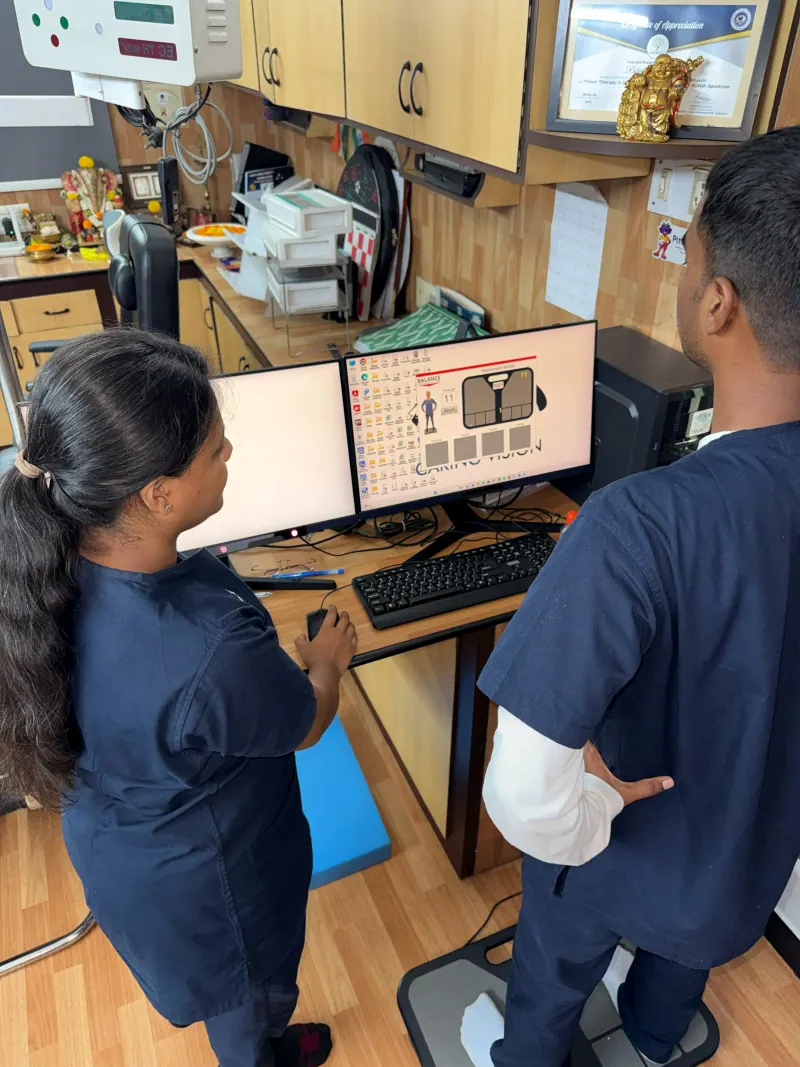
Therapist measuring near vision with a reading chart during a lazy eye assessment
Every plan starts by measuring each eye on its own, with the best glasses in place.

Wondering whether it is too late? An assessment measures the weaker eye and the suppression, and gives you an honest estimate of the likely gain.

Try It Yourself

Which Treatments Suit That Age?

Pick the age and the situation. The options re-order to show what usually fits.

Age
Does an eye turn?
Treatment so far
How weak is the eye?

General guidance from published research. What suits your child or you is confirmed at an assessment.

Four Things That Predict the Result

Age is only one factor. When we estimate how much a weaker eye can gain, these count as much:

  • How weak the eye is at the start: mild and moderate lazy eyes gain more
  • The cause: a focusing difference responds better than a long-standing squint
  • Whether it was treated before: a first course usually does better than a repeat
  • Whether treatment is actually done: a daily routine beats occasional intensity
Common Questions

Questions Families Ask

Can a 10-year-old's lazy eye be treated?
Yes. Children aged 7 to 12 still respond well, particularly if they have never been treated. Treatment usually takes longer than in a preschool child and often combines patching with binocular therapy.
Is it too late to treat lazy eye at 15?
Not necessarily. Teenagers who have not had treatment before often gain a line or more. Patching alone helps less at this age, so binocular and dichoptic therapy usually carry more of the programme.
Can lazy eye be treated after 20?
Yes, within limits. Adults commonly gain one to three lines with binocular therapy, and some gain depth perception. A full return to normal vision is less likely than in a young child.
Why does lazy eye treatment work better in young children?
The visual brain is still being wired in the first years of life, so a small change in what the eyes see produces a large, lasting change in how the brain uses them. Later, the same change takes more time and a stronger signal.
Will lazy eye get worse if it is left untreated?
In a young child, an untreated lazy eye usually stays weak for life and can get weaker while the brain is still developing. In adults it is usually stable, but the weaker eye matters if the good eye is ever injured or diseased.

Find Out How Much the Weaker Eye Can Gain

A lazy eye assessment measures the vision in each eye, checks for a squint and for suppression, and sets out a written plan. In clinic in Chennai and Hyderabad, with online consultations across India.

Vision Simulator