Nystagmus in babies, children and adults: types, causes, the head turn, when it is urgent, treatments with real evidence, and what helps vision day to day.
What Is Nystagmus?
Nystagmus means the eyes make repetitive movements that a person cannot control, usually side to side, sometimes up and down or in a circle. It can begin in the first months of life or appear later. New nystagmus at any age needs a prompt medical check. Long-standing nystagmus rarely stops, but glasses, positioning and training can help.
Sometimes a parent spots it during feeding: the baby's eyes make small, quick movements from side to side and don't seem to settle. Sometimes an adult says the whole room has started to jiggle. Both are nystagmus, but they are very different situations, and the first thing anyone needs to know is when it began.
A UK survey estimated that about 24 in every 10,000 people have nystagmus, so it is uncommon but far from rare. Many people with it finish school, work and live full lives. There is a lot that can be done, even when the movement itself cannot be stopped.
What nystagmus looks like
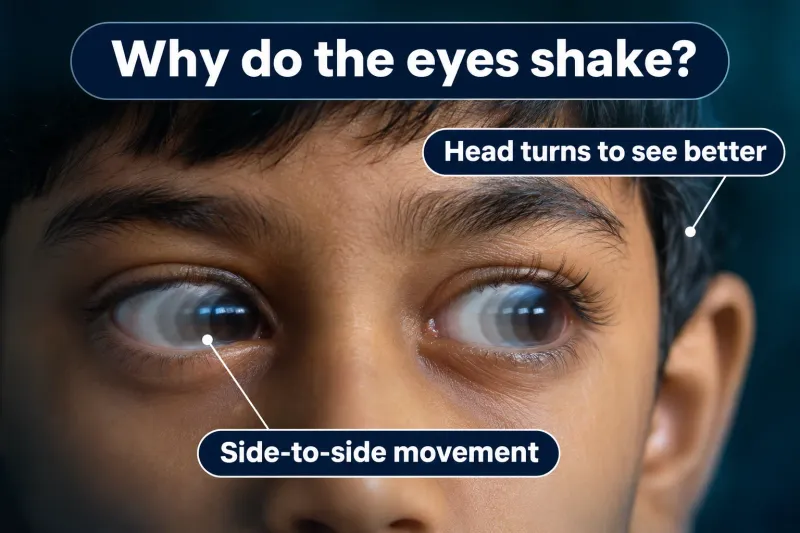
The eyes move repeatedly without the person controlling it. The movement can be side to side, up and down, circular or a mix. It may be fast or slow, wide or so small that only an examination shows it. Most forms involve both eyes.
Vision is affected because a sharp image needs the eye to stay still on its target, and in nystagmus that still time is short. Tiredness, stress and new surroundings tend to make it worse, which is why a child's vision can seem to change from day to day. A person who sees well in the morning at home may struggle in the afternoon at school. They are not being careless.
Infantile or acquired: the difference that matters most
Infantile nystagmus
This usually appears in the first few months of life. The person grows up with it, and the world does not appear to move for them. Sometimes the eyes themselves are healthy and no cause is found, which is called idiopathic. In others, it comes with an eye condition such as albinism, a retinal disease, congenital cataract or an optic nerve problem. Some forms run in families.
Fusion maldevelopment or latent nystagmus
Here the eyes move more when one eye is covered, and this is often linked with a squint from early infancy. It tells us the two eyes did not learn to work together in the normal way.
Spasmus nutans
This begins at around 4 to 12 months, with a small shimmering eye movement, head nodding and a head tilt. It usually settles by itself within a few years, but doctors often want a scan, because a similar picture can occasionally be caused by a growth near the visual pathways.
Acquired nystagmus
This starts later in life or later in childhood. People often see the world moving or jiggling, known as oscillopsia, and that is a strong sign that it is new. Causes include stroke, multiple sclerosis, a growth or other brain condition, inner ear problems, head injury, alcohol, and medicines such as sedatives and some epilepsy drugs. Up and down nystagmus in particular often points to a brain cause. Nystagmus that comes on with vertigo when you turn your head in bed, sometimes described as geotropic, usually comes from the inner ear and is treated by an ENT doctor or physiotherapist.
Normal nystagmus
Everyone gets a form of it when watching scenery from a moving train, and many people get a few beats when looking far to one side. Neither is a disease.
When it needs urgent attention
- New nystagmus in a baby: see an eye doctor within days. Do not wait to see if it settles.
- New nystagmus in an older child or adult: get a prompt medical check. Go the same day if there is headache, vertigo, weakness, numbness, slurred speech, double vision, trouble walking or a recent head injury.
- Nystagmus in one eye only, or more in one eye: this needs a neurological check.
- A known nystagmus that suddenly changes: have it re-examined.
The head turn: please don't correct it
Many people with nystagmus have a direction of gaze where the eyes are steadiest, called the null point. To use it, they turn or tilt their head, sometimes quite noticeably. Families and teachers often tell the child to sit straight. Please don't, because that head position is how they are getting their best vision.
Many children also hold things very close. For some, this is because turning the eyes inward for near targets makes the eyes steadier. Holding a book close will not harm their eyes.
Treatments and how strong the evidence is
First, an eye specialist will look for the cause, and that can involve a dilated examination, retinal scans, electrical tests of the retina, genetic tests, or a brain scan when needed. Then the options include:
- Glasses. Power is common in nystagmus and easy to miss. Correcting it properly is the simplest thing that can help, and it should be checked regularly.
- Contact lenses. These move with the eye, and some people find their vision is better and steadier with them.
- Prisms. These can help by moving the image towards the null point, or by encouraging the eyes to turn inward, which steadies them for some people.
- Medicines. In a randomised study, memantine and gabapentin reduced infantile nystagmus and brought a small gain in vision, but with some uncertainty when compared with placebo. They are also used for some acquired forms. This is a specialist decision, with possible side effects.
- Surgery. Operating on the eye muscles can shift the null point closer to straight ahead, which reduces a large head turn. It does not make the eyes still.
- Biofeedback training. A pilot study of 10 children found better vision, reading speed and steadiness after training. That is encouraging, but there was no comparison group, so we cannot call it proven.
How nystagmus affects a child's vision development
Babies learn to see by looking. They fix on faces, follow movement, reach for what they see and start to crawl towards it. A baby with nystagmus has less steady time on each thing they look at, along with whatever eye condition may be causing it. So these visual milestones can come later. Eye contact may seem poor, and reaching or walking may be delayed, particularly where other developmental problems are present.
Early support can make a real difference to how a child uses the vision they have. That means good correction of any power, plenty of high-contrast and well-lit things to look at, time to find the best head position, and help for the child to link what they see with what they do with their hands and body. At school age, the challenges shift to reading, copying from the board, and sports with fast-moving balls.
What behavioural vision care and vision therapy can do
Vision therapy does not stop nystagmus, and we would be wary of anyone who says it does. What it can do is help the person get more from their vision. Depending on the person, that may include:
- Finding and making the most of the best head position and viewing distance
- Working on fixation and eye movement control, within what the eyes can do
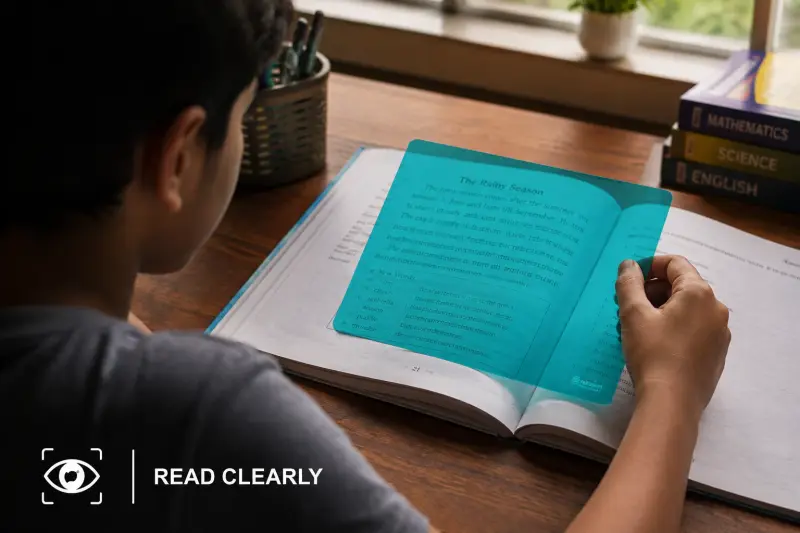
- Building reading strategies such as larger print, line guides and good lighting
- Developing eye-hand coordination, balance and awareness of space
- Treating eye teaming or focusing problems that are also present
- Choosing low vision aids, tablets and magnifiers where they help
Our own clinicians have published case reports on nystagmus, including a child with global developmental delay and an adult with long-standing amblyopia. You can read about them in our academic contributions. A case report describes one person's progress, so please read them as what was possible in that case rather than as a promise for everyone.
What a developmental and behavioural optometrist looks at in nystagmus
An ophthalmologist or neurologist usually leads on the diagnosis and the medical side. A developmental and behavioural optometrist looks at how the person functions day to day. How do they read? Where do they hold a book? How do they manage the board, stairs, a moving ball? They measure vision at different distances and head positions, refine the prescription, and plan practical training that fits the person's age and goals. For a child, they can also talk with the school about simple changes:
- A seat that suits the null point, which may not be the front centre
- Permission to turn the head and hold work close
- Handouts and enlarged notes instead of copying from far away
- Extra time for reading, since it can take more effort, and more so when tired
If you or your child has nystagmus that has been checked medically, book a neuro-optometric assessment at Caring Vision Therapy. If it is new and has not yet been checked, please see an eye doctor first.
Explore More at Caring Vision Therapy
Frequently Asked Questions
Can nystagmus be cured?
What causes nystagmus?
Is nystagmus serious?
Do nystagmus eyes get worse with age?
Why does my child turn their head to look at things?
Can a child with nystagmus go to a normal school?
Can vision therapy help nystagmus?
Sources
- Nystagmus Types. StatPearls, NCBI Bookshelf.
- Nystagmus in Pediatric Patients: Interventions and Patient-Focused Perspectives. Clinical Ophthalmology, 2015.
- The Prevalence of Nystagmus: the Leicestershire Nystagmus Survey. Investigative Ophthalmology and Visual Science, 2009.
- Memantine and Gabapentin May Improve Congenital Nystagmus Symptoms. American Academy of Ophthalmology.
- Post Audio-Visual Biofeedback Training Visual Functions and Quality of Life in Paediatric Idiopathic Infantile Nystagmus: a Pilot Study. European Journal of Ophthalmology, 2021.
Reviewed by the Caring Vision Therapy clinical team. Updated November 2026.