
How vision, the vestibulo-ocular reflex and the vestibular system keep you balanced, and why VOR problems cause dizziness and motion sensitivity.
Book a ConsultationHow Are Vertigo and Vision Connected?
How vision, the vestibulo-ocular reflex and the vestibular system keep you balanced, and why VOR problems cause dizziness and motion sensitivity.
Dizziness, vertigo and a general sense of unsteadiness are usually blamed entirely on the inner ear or the brain. But vision plays a far larger role in balance than most people realise. Have you ever felt dizzy turning your head quickly, noticed that stationary objects seem to move slightly as you walk, or felt uncomfortable in a busy supermarket, a moving car, or a room with a repetitive pattern on the floor? In many cases, these symptoms are related to how the eyes, inner ear and brain coordinate - specifically, a mechanism called the vestibulo-ocular reflex.
What Is the Vestibulo-Ocular Reflex?
The vestibulo-ocular reflex, or VOR, is what keeps your vision stable while your head is moving. Try it: look at a word on this page and gently turn your head side to side while keeping your eyes on the word. The text stays relatively clear and stable because, as your head moves in one direction, your eyes automatically move in the opposite direction - almost instantly and without conscious effort. In simple terms: head movement is detected by the vestibular system, the brain processes that information, and the eyes move to compensate, keeping the visual target stable. This is what allows you to see clearly while walking, running, or turning your head.
How the Inner Ear, Eyes and Brain Work Together for Balance
The inner ear houses the vestibular system, which detects head rotation, linear acceleration, changes in head position and movement relative to gravity. The brain combines this information with input from vision, and from proprioception - the sense of where your muscles and joints are in space. Together, these three systems maintain postural control and spatial orientation. Vision does not operate independently; it is one part of a larger sensory network the brain relies on to understand where the body is and how it is moving. When the information from all three systems agrees, balance is effortless. When it becomes inconsistent, the brain struggles to interpret what is actually happening, and that mismatch can produce dizziness, unsteadiness, visual discomfort, motion sensitivity, nausea, or a sensation that the environment itself is moving.
What Happens When the VOR Is Not Working Efficiently
If the VOR does not compensate appropriately for head movement, the visual world can appear unstable - a phenomenon sometimes called oscillopsia, where the environment seems to bounce or move whenever the person moves. Patients describe this in very different ways: "the words move when I walk," "everything bounces when I turn my head," or simply "I feel dizzy." The specific symptoms depend on the underlying cause and how well the visual and vestibular systems are integrating.
Why Some People Feel Dizzy Turning Their Head
When the head moves, the vestibular system sends signals the brain uses to coordinate eye movements. If that vestibular information is inaccurate, delayed, reduced, or poorly integrated with vision, the visual system cannot stabilise the image efficiently. The result is a mismatch between what the eyes see and what the vestibular system reports, and the brain often interprets that mismatch as dizziness, motion sensitivity or spatial disorientation.
The Connection Between Vertigo and Vision
Vertigo is a symptom, not a single disease - it can stem from vestibular disorders, neurological conditions, migraine, medication effects and other medical causes. But vision can also shape how dizziness is experienced. A person can have entirely normal eyesight and still have real difficulty processing visual motion or coordinating vision with vestibular information. This is why persistent dizziness sometimes warrants an assessment of visual and ocular motor function as part of a broader clinical work-up, alongside standard vestibular and neurological evaluation.
Visual Motion Sensitivity: Why Busy Environments Feel Overwhelming
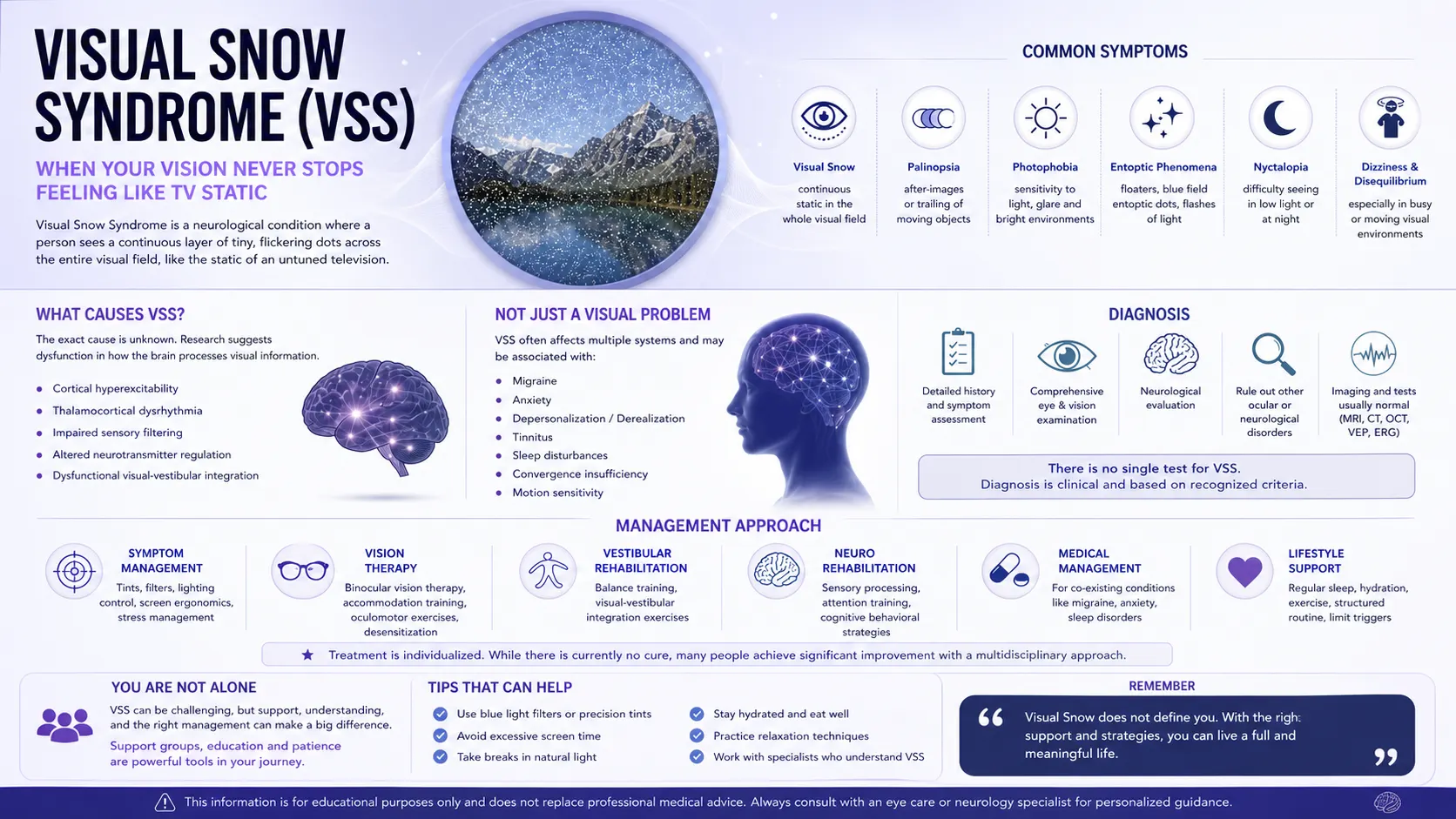
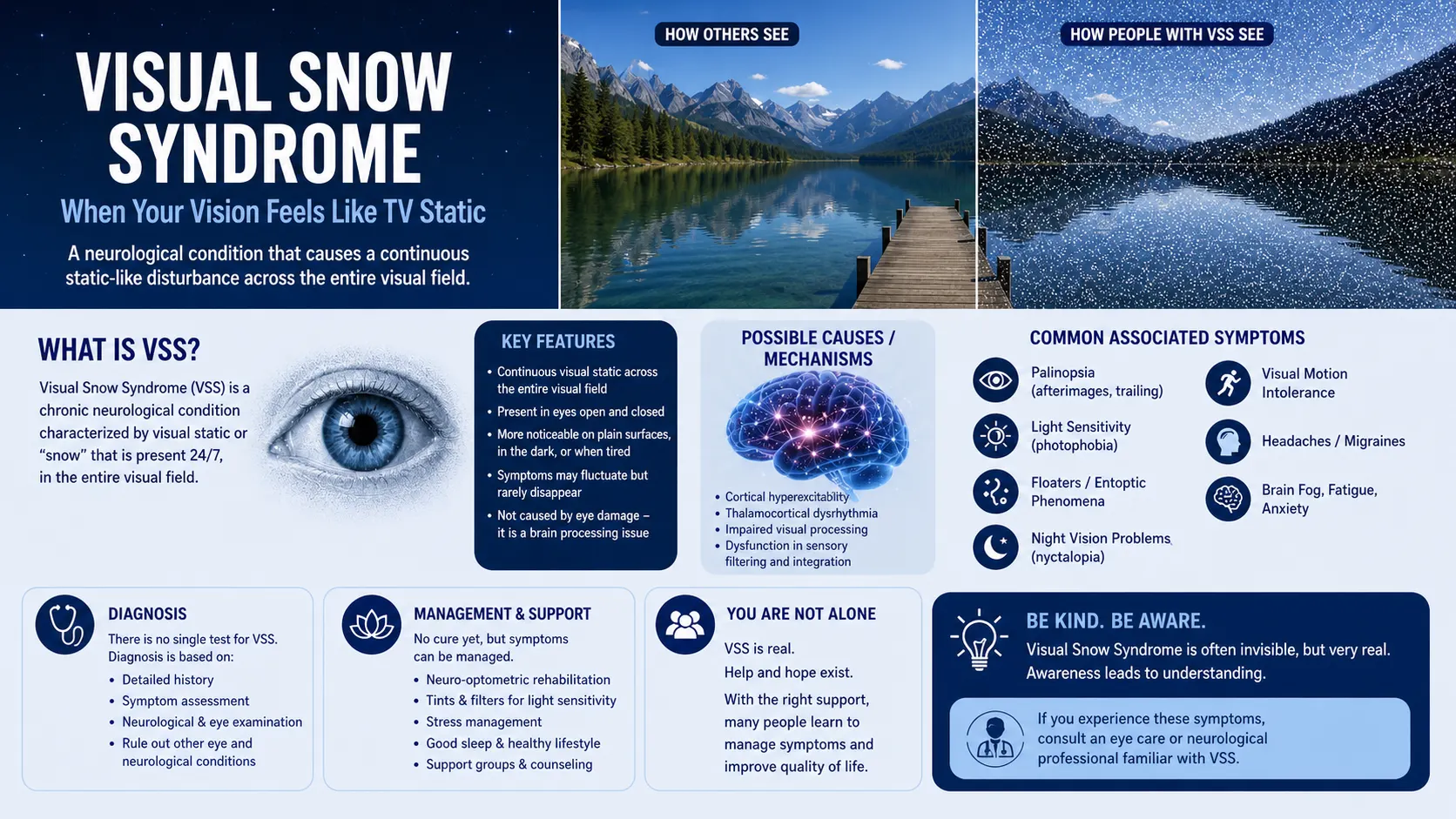
Some people become genuinely uncomfortable in visually busy places - a crowded shopping centre, an escalator, fast-moving footage on a screen, a car in traffic. This is sometimes called visual motion sensitivity or visual dependence, and it can produce dizziness, nausea, headache, disorientation, anxiety related to movement, difficulty focusing and a general sense of being overwhelmed by the environment.
Why a Supermarket Can Make You Dizzy
This is a surprisingly common complaint. Picture walking down a supermarket aisle: shelves on both sides, people and trolleys moving, overhead lighting, colour and pattern filling your peripheral vision, your own head moving as you walk and your eyes constantly scanning, while your vestibular system is simultaneously detecting all of that movement. The brain has to integrate an enormous amount of information almost continuously. If the visual-vestibular system is not processing it efficiently, the environment can feel genuinely overwhelming. The issue is rarely the supermarket itself - it is how the brain is handling the combined visual and vestibular load.
How a Poor VOR Affects Walking
Every step produces small head movements. When the VOR works well, the eyes compensate automatically and the visual world stays stable. When it does not, walking itself can trigger visual instability - people may walk more slowly, avoid turning their head while moving, hold onto walls or furniture, feel unsteady, avoid crowded places, or notice dizziness specifically when looking side to side while in motion. Over time, some people become increasingly dependent on visual cues to stay balanced, which adds further strain when the visual environment is complex.
Can Concussion Affect the Vestibulo-Ocular Reflex?
Yes. After concussion or mild traumatic brain injury, some people develop problems with eye movements, binocular vision, focusing, visual motion processing and vestibular function - producing dizziness, headache, blurred vision, motion sensitivity, reading difficulty, visual fatigue, balance problems, and discomfort in busy environments. Not everyone with a concussion develops these symptoms, and the same symptoms can have other causes, so a comprehensive clinical evaluation matters.
What Does a Visual-Vestibular Assessment Involve?
Depending on symptoms and history, assessment may evaluate eye alignment, oculomotor function (saccades and pursuits), vestibulo-ocular responses to head movement, binocular vision, accommodation, sensitivity to specific visual motion environments, and, where appropriate, functional balance. The exact combination of tests depends entirely on how the individual presents.
What Is Neuro-Optometric Rehabilitation for Vestibular Problems?
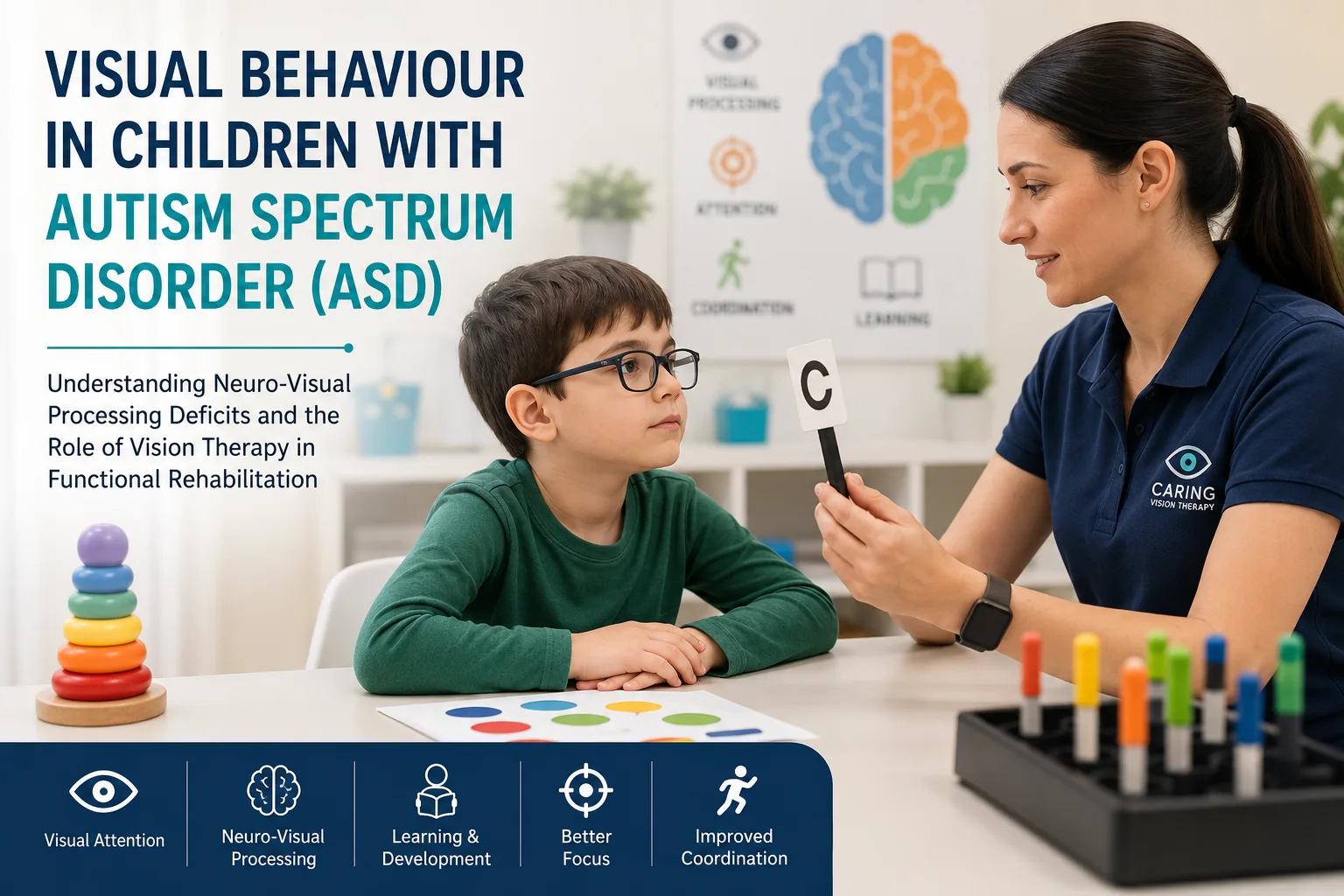
Neuro-optometric rehabilitation addresses visual and visual-motor difficulties linked to neurological conditions or acquired brain injury. Depending on findings, a programme may target eye movement control, binocular vision, visual tracking, focusing, spatial awareness, visual motion processing, and visual-vestibular integration, typically through carefully graded activities involving head and eye movements, gaze stabilisation, saccadic training, binocular tasks and structured exposure to visual motion. The goal is not to "exercise the eyes" in isolation - it is to improve the brain's ability to process and coordinate the relevant sensory information during real functional activities like walking through a store or working at a screen.
Why Treatment Must Be Individualised
Dizziness is complex, and two people with near-identical symptoms can have completely different underlying mechanisms - a primary vestibular disorder, migraine-associated dizziness, visual motion sensitivity, or some combination of vestibular, visual and neurological factors. Giving everyone an identical set of exercises is not appropriate; a proper clinical evaluation is what identifies which visual functions, if any, are actually contributing to a specific person's symptoms.
When Should You Seek an Evaluation?
Consider a clinical evaluation for persistent or recurrent vertigo, dizziness, visual instability, difficulty walking, balance problems, motion sensitivity, blurred vision with head movement, difficulty reading while moving, or discomfort in visually busy environments. Sudden or severe vertigo, particularly with weakness, difficulty speaking, a severe headache, fainting, or new coordination problems, requires urgent medical assessment, not a vision clinic visit.
At Caring Vision, we look beyond visual acuity to understand how vision functions as part of a person's overall interaction with movement and their environment, because seeing clearly is important, but seeing comfortably and maintaining visual stability while moving through the world matters just as much. If dizziness, visual instability or discomfort in busy environments is a recurring problem for you or a family member, book a comprehensive visual-vestibular assessment at Caring Vision Therapy.
Explore More at Caring Vision Therapy
Frequently Asked Questions
What is the vestibulo-ocular reflex?
The vestibulo-ocular reflex (VOR) is an automatic system that moves the eyes in response to head movement, helping keep visual targets stable while the head is in motion.
Can a poorly functioning VOR cause dizziness?
A poorly functioning or poorly compensated VOR can contribute to visual instability, dizziness and motion-related symptoms, although dizziness can have many different causes.
Can vision problems affect balance?
Yes. Vision provides important information about spatial orientation and movement and works together with the vestibular and proprioceptive systems to help maintain balance.
Why do I feel dizzy in supermarkets or crowded places?
Visually busy environments can be challenging for people with visual motion sensitivity or visual-vestibular difficulties, because the brain has to process large amounts of moving visual information while the body and head are also moving.
Can concussion affect eye movements and balance?
Yes. Some people develop visual, ocular-motor and vestibular difficulties following concussion, which can contribute to symptoms such as dizziness, headache, visual instability and balance problems.
Can neuro-optometric rehabilitation help with dizziness after concussion?
For selected individuals with identified visual or visual-vestibular deficits, appropriately designed neuro-optometric rehabilitation may be part of a multidisciplinary rehabilitation programme.
Does everyone with vertigo need vision therapy?
No. Vertigo has many possible causes, and treatment depends on the underlying condition. Appropriate medical and vestibular evaluation is important before deciding whether visual rehabilitation is indicated.