Squint doesn't always need surgery. See when vision therapy corrects eye turn, when surgery is genuinely needed, and real treatment costs in India.
Book a ConsultationCan Squint (Strabismus) Be Treated Without Surgery in India?
Squint doesn't always need surgery. See when vision therapy corrects eye turn, when surgery is genuinely needed, and real treatment costs in India.
Related Resources
- Lazy eye vs squint: the difference explained
- Squint treatment without surgery Chennai
- Vision therapy vs surgery for squint: full comparison
- Amblyopia treatment alongside squint therapy
- Vision therapy clinic in Anna Nagar, Chennai
- How our functional vision evaluation works
- Book a squint evaluation in Chennai or Hyderabad
When parents hear that their child has a squint, the assumption is almost always the same: surgery is coming. Many are surprised - and relieved - to learn that surgery is not always the only or even the best option. In a significant number of cases, structured vision therapy can reduce or correct the eye turn, develop binocular vision, and restore functional sight without an operation.
This article explains what squint (strabismus) actually is, when vision therapy is an appropriate treatment, what surgery does and does not achieve, and how to make an informed decision for your child or yourself.
What Is Squint (Strabismus)?
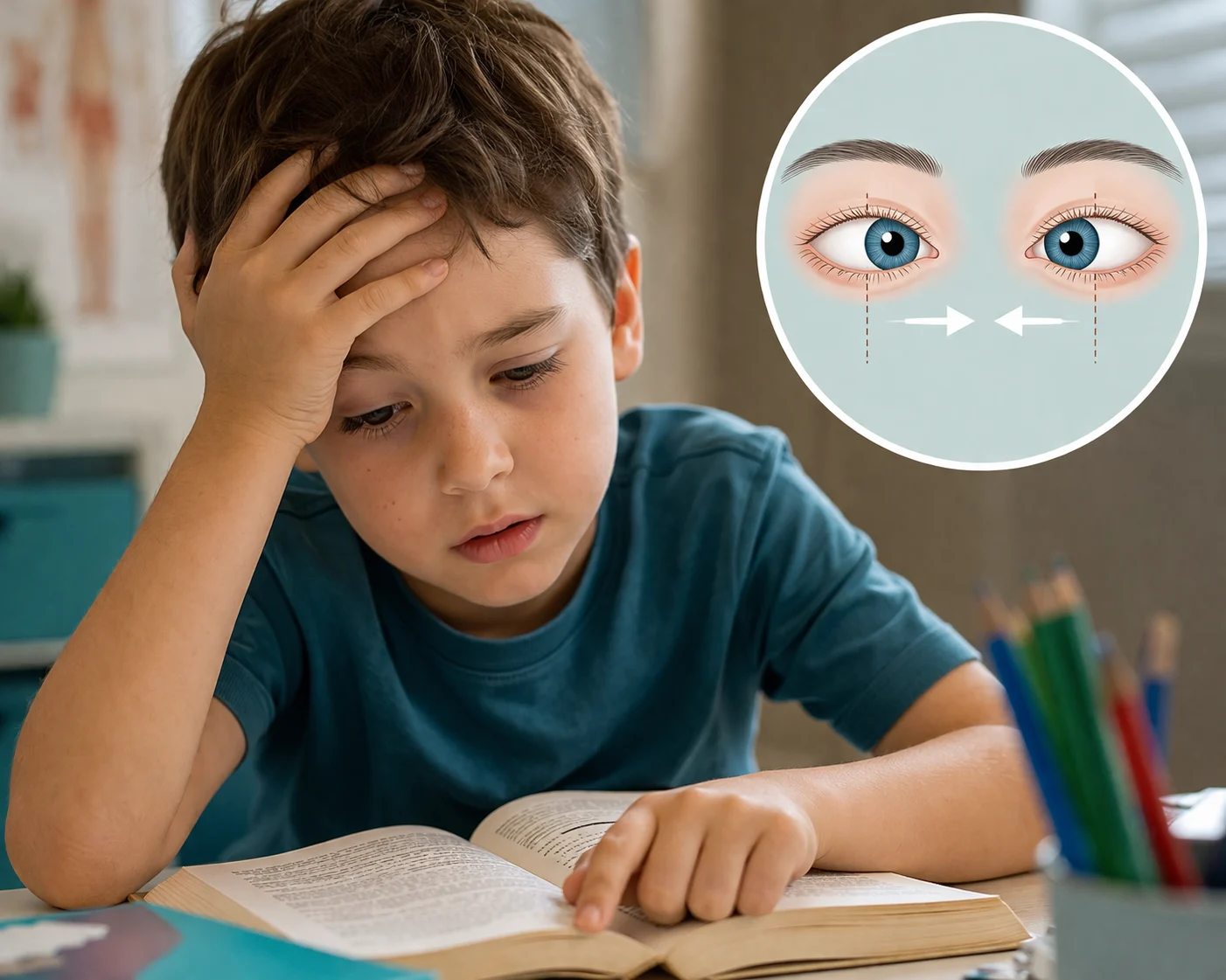
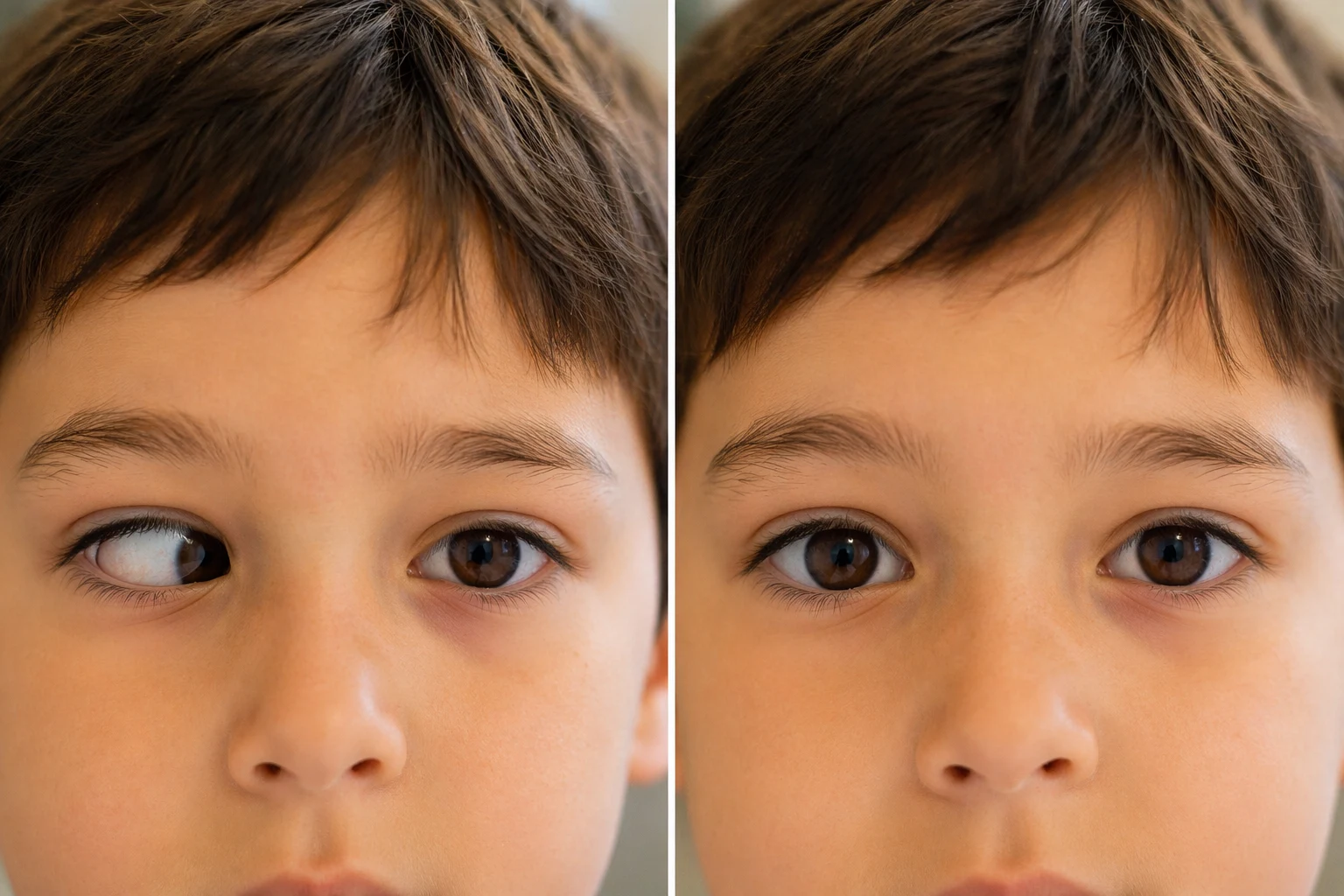
Strabismus is the medical term for a condition in which the eyes do not point in the same direction at the same time. One eye may turn inward (esotropia), outward (exotropia), upward (hypertropia), or downward (hypotropia). The misalignment may be constant or intermittent, and it may affect one eye or alternate between both eyes.
The term squint is the common name used in India and the UK. In the United States, it is typically called a crossed eye or turned eye. All refer to the same condition.
Why Does Squint Happen?
Strabismus develops because of a breakdown in the complex coordination required to keep both eyes aligned. The visual system must constantly calibrate six muscles on each eye to maintain single, aligned binocular vision. When this coordination fails - due to developmental factors, refractive errors, neurological issues, or muscle imbalance - one eye drifts out of alignment.
The brain, receiving conflicting information from two misaligned eyes, often resolves the confusion by suppressing the image from the deviating eye. Over time, this suppression can lead to amblyopia (lazy eye) in the deviated eye if the condition is not addressed.
The Limitations of Surgery Alone
Strabismus surgery repositions the eye muscles to cosmetically realign the eye. It is effective at achieving cosmetic improvement - the eye looks straight - but surgery alone does not develop binocular vision. It does not teach the brain and visual system to coordinate both eyes together as a functional team. It corrects the mechanical angle but leaves the underlying neurodevelopmental problem unaddressed.
Why Vision Therapy Is Often Still Needed After Surgery
This is why many patients who have strabismus surgery continue to experience visual symptoms - double vision, suppression, poor depth perception, and visual fatigue - even after the eye appears cosmetically aligned. The muscles have been repositioned, but the visual system has not been trained to use binocular vision. Post-surgical vision therapy is frequently necessary to build on the alignment the surgery achieves.
Re-Operation Rates
Strabismus surgery has re-operation rates of 20–40% over a patient's lifetime for some types of squint. This is not a criticism of surgery - it is a reflection of the fact that eye alignment is neurologically driven and mechanically correcting it does not always produce a stable, permanent result, particularly when binocular vision has not been developed.
When Can Vision Therapy Treat Squint Without Surgery?
Whether vision therapy alone can correct a squint depends on the type, size, and duration of the deviation, and critically, on whether any functional binocular potential remains. A thorough evaluation is essential before determining which treatment path is appropriate.
Types of Squint Where Vision Therapy Is Often Highly Effective
- Intermittent exotropia - an outward drift that is not constant is one of the conditions that responds best to vision therapy. Many children with intermittent exotropia can achieve full control of their eye alignment through structured therapy without surgery.
- Convergence insufficiency esotropia - inward turning triggered by near work is often caused by a convergence dysfunction that responds directly to vision therapy targeting near vergence.
- Accommodative esotropia - inward turning driven by the focusing system, where corrective lenses combined with vision therapy can resolve or significantly reduce the deviation.
- Small-angle deviations - small and moderate deviations with preserved binocular potential are strong candidates for non-surgical treatment.
When Surgery May Be Necessary or Preferred
- Large-angle constant deviations with no remaining binocular potential
- Infantile esotropia (onset in the first 6 months of life) where early surgical alignment is important for binocular vision development
- Cases where the eye turn is driven by a mechanical or neurological problem that cannot be resolved through training
Even in cases where surgery is ultimately needed, pre-surgical and post-surgical vision therapy significantly improves outcomes by preparing the visual system before the procedure and developing binocular function afterward.
What Vision Therapy for Squint Actually Involves
Vision therapy for strabismus is not eye exercises done at home. It is a structured, clinician-guided programme that progressively trains the visual system to achieve and maintain binocular alignment. At Caring Vision Therapy, strabismus treatment programmes include:
Binocular Vision Development
Using instruments such as vectograms, anaglyphs, prism bars, and specialised computer-based binocular vision tools, therapy progressively trains the eyes to work together at increasing levels of demand - first at coarse levels and then at finer, more stable binocular integration.
Suppression Elimination
Before stable binocular vision can be achieved, the brain's suppression of one eye must be addressed. Therapy uses anti-suppression activities to restore awareness in the deviated eye and build simultaneous perception of both eyes' inputs.
Stereopsis and Depth Perception Training
The goal is not just cosmetic alignment - it is functional binocular vision including stereopsis (3D depth perception). Therapy works toward stable stereopsis as the ultimate measure of successful binocular vision development.
Optometric Syntonics
Light-based syntonics phototherapy is used as a component of many strabismus programmes to support neurological visual organisation, peripheral vision, and the regulatory pathways that underpin binocular function.
What Results Can Be Expected?
Outcomes vary by squint type, size, duration, and patient age, but vision therapy for appropriate strabismus cases produces measurable improvements in eye alignment, suppression, and binocular function. Intermittent exotropia in children often responds particularly well, with many patients achieving full control. Even where complete cosmetic correction is not possible without surgery, vision therapy frequently reduces the size of the deviation and develops functional binocular vision that surgery alone would not produce.
The Honest Evaluation: Why You Need One Before Deciding
The most important thing is an honest, thorough evaluation before any decision is made. Not every squint can be treated without surgery. Not every squint requires surgery. The appropriate treatment depends on the individual case, and the only way to know which path is right is through a proper functional vision and binocular vision assessment by a qualified specialist.
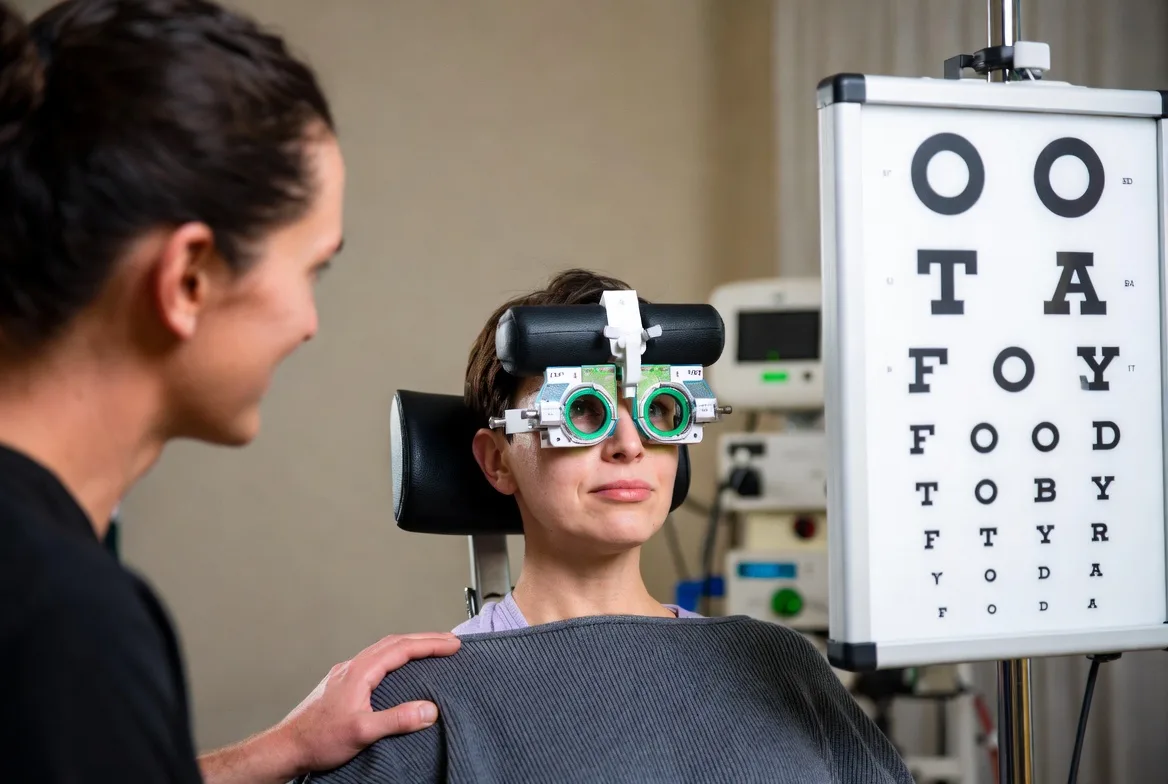
At Caring Vision Therapy, our evaluation includes full binocular vision testing, assessment of suppression, stereopsis measurement, and detailed analysis of the deviation type and magnitude. We give honest guidance on what vision therapy can achieve, when surgery would be recommended, and how the two approaches work best together where both are needed.
Learn more about our Strabismus (Squint) Vision Therapy programme or book a full evaluation in Chennai or Hyderabad.
Explore More at Caring Vision Therapy
- Lazy eye vs squint: the difference explained
- Squint treatment without surgery Chennai
- Vision therapy vs surgery for squint: full comparison
- Amblyopia treatment alongside squint therapy
- Vision therapy clinic in Anna Nagar, Chennai
- How our functional vision evaluation works
- Book a squint evaluation in Chennai or Hyderabad