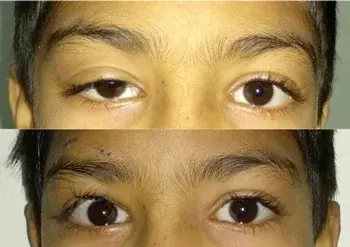
Strabismus, known in India by the common term squint or crossed eyes, is a condition in which the two eyes do not point in the same direction at the same time. One eye may turn inward (esotropia), outward (exotropia), upward (hypertropia), or downward (hypotropia), and the deviation may be constant or intermittent, occurring only during fatigue, prolonged near work, or exposure to bright light. Strabismus affects an estimated 3 to 4 percent of the global population and can present in infants, children, and adults. Regardless of the direction or consistency of the eye turn, the functional and developmental consequences for vision require specialist evaluation and targeted treatment.
When the eyes point in different directions, the brain receives two images from different visual angles that cannot be fused into a single, coherent three-dimensional picture. In children, the brain typically responds by suppressing or ignoring the image from the deviating eye to prevent confusion and double vision. This suppression prevents the development of binocular single vision and depth perception, and it commonly leads to amblyopia (lazy eye) in the turned eye if left untreated. Adults who develop strabismus often experience persistent double vision, spatial disorientation, and significant visual discomfort, because the adult brain is less able to suppress competing images from the two eyes.
Strabismus arises from a failure in the complex system that controls eye alignment, which includes the six extraocular muscles of each eye, the cranial nerves that supply them, and the brain centres responsible for coordinating binocular vision. Causes include abnormal development of the neuromuscular control system, accommodative factors (where uncorrected farsightedness places excessive strain on the focusing-convergence linkage and triggers an inward eye turn), genetic predisposition, neurological conditions, developmental delay, and in some cases head injury or illness. Accommodative esotropia is a particularly important subtype because it is highly responsive to optical correction combined with vision therapy, without requiring surgery.
In India, many families are directed immediately toward strabismus surgery as the primary and only treatment. Surgery addresses the cosmetic alignment of the eyes by adjusting the length or attachment point of the extraocular muscles. However, surgery alone does not treat the underlying binocular vision dysfunction, does not teach the brain to fuse images from both eyes simultaneously, and does not develop functional depth perception. Multiple surgeries are sometimes required because alignment can shift after initial correction, and the patient may still lack functional binocular vision despite a cosmetically straight appearance. For many types of strabismus, particularly intermittent and accommodative forms, vision therapy can achieve functional alignment and develop true binocular coordination without surgical intervention.
At Caring Vision Therapy in Chennai, strabismus treatment begins with a comprehensive functional vision evaluation that measures the angle and type of deviation, the depth of binocular suppression, stereopsis, and the neurological potential for binocular vision development. Treatment is then individualised and may include precision optical correction to address any refractive or accommodative contribution, vergence and eye alignment therapy, binocular integration exercises to develop simultaneous use of both eyes, anti-suppression training, and optometric syntonics phototherapy to stimulate the neurological visual pathways and support binocular vision development. Our COVD certified and NORA affiliated specialists design each programme based on the patient's specific strabismus type, age, and binocular vision profile.
The goals of strabismus treatment at Caring Vision Therapy include improved or normalised eye alignment, reduction and eventual elimination of suppression, development of binocular single vision with functional stereopsis (depth perception), and elimination of double vision where applicable. For patients with constant or large-angle deviations, vision therapy may be combined with surgical consultation to maximise binocular outcomes after primary alignment is achieved. For patients with intermittent exotropia, accommodative esotropia, and small-angle constant deviations, vision therapy alone frequently achieves stable functional binocular control.
Strabismus treatment is appropriate for patients of all ages. Children treated during the sensitive period of visual development, typically before age 8 to 10, generally achieve the strongest binocular outcomes. However, adults with strabismus, including those with longstanding eye turns, can benefit significantly from neuro-optometric rehabilitation that improves visual comfort, reduces suppression, and in some cases develops a level of binocular function that was never previously established. Our Chennai and Hyderabad clinics have successfully treated adult patients who were told as children that nothing more could be done about their eye turn.
If you or your child has a squint, crossed eyes, an eye turn in any direction, or a history of strabismus surgery that has not produced satisfactory binocular outcomes, a comprehensive functional vision evaluation at Caring Vision Therapy is the essential first step. Our specialist team will assess the full binocular vision profile, discuss realistic treatment goals, and design an individualised programme. Contact our Chennai or Hyderabad clinic to schedule your evaluation and explore whether vision therapy can help achieve functional binocular vision and a lasting improvement in visual quality of life.
Related Reading