How retained primitive reflexes affect visual development, reading, posture, attention and learning, and how integration therapy helps.
Book a ConsultationWhat Is Primitive Reflex Integration in Vision Therapy?
How retained primitive reflexes affect visual development, reading, posture, attention and learning, and how integration therapy helps.
Primitive reflexes are automatic movement patterns that develop during fetal life and early infancy. These reflexes play an essential role in early neurological development, helping infants survive, interact with their environment, and establish foundational sensory and motor pathways.
As the nervous system matures, primitive reflexes are gradually integrated and replaced by higher-level postural reflexes and voluntary motor control. However, in some children, these reflexes remain partially retained beyond infancy and may interfere with visual efficiency, reading development, posture, balance, attention, coordination, and learning performance.
Many children who struggle with reading, poor concentration, clumsiness, weak eye tracking, or visual fatigue may have completely normal eyesight during a routine eye examination. In such cases, underlying neurodevelopmental immaturity and retained primitive reflexes may contribute to the child's functional visual difficulties.
At Caring Vision, Primitive Reflex Integration is incorporated as part of a comprehensive Vision Therapy and Neuro Optometric Rehabilitation approach designed to support visual development, sensory integration, binocular coordination, and overall neurological efficiency.
What Are Primitive Reflexes?
Primitive reflexes are involuntary automatic movement responses controlled primarily by lower brain centers, especially the brainstem. These reflexes emerge during fetal development and infancy and support early survival and neurological organisation.
Primitive reflexes help infants develop:
- Muscle tone
- Postural control
- Sensory awareness
- Movement coordination
- Visual orientation
- Balance integration
- Spatial awareness
As higher cortical control develops, these reflexes are naturally integrated within the first year of life. However, when primitive reflexes remain retained beyond their expected developmental stage, they may interfere with:
- Eye movement control
- Reading efficiency
- Binocular vision
- Attention regulation
- Postural stability
- Vestibular processing
- Motor planning
- Visual perception
Why Primitive Reflex Integration Matters in Vision Therapy
Vision is not limited to eyesight alone. Efficient visual performance depends upon the integration of multiple neurological systems working together simultaneously - including visual processing, vestibular integration, proprioceptive awareness, bilateral coordination, eye movement control, postural stability, sensory organisation, and attention regulation.
Retained primitive reflexes may disrupt this neurological foundation and create stress within the visual system. Children may experience:
- Poor eye tracking
- Skipping lines while reading
- Letter reversals
- Difficulty copying from the board
- Reduced visual attention
- Reading fatigue
- Motion sensitivity
- Poor concentration
- Clumsiness
- Weak handwriting posture
Vision Therapy often becomes significantly more effective when retained primitive reflexes are simultaneously addressed through neurodevelopmental rehabilitation strategies.
Causes of Retained Primitive Reflexes
Retained primitive reflexes may result from incomplete neurological maturation or disruptions during early development.
Prenatal Factors
Possible contributing prenatal factors include maternal stress, prematurity, intrauterine positioning difficulties, maternal illness, exposure to toxins, and reduced fetal movement.
Birth-Related Factors
Certain birth-related factors may contribute to reflex retention, including prolonged labour, Caesarean section delivery, instrument-assisted delivery, birth trauma, fetal distress, and oxygen deprivation during delivery.
Early Developmental Factors
Environmental and developmental influences may also affect neurological maturation, including reduced tummy time, delayed crawling, limited movement experiences, excessive screen exposure, sensory deprivation, and chronic illness during infancy.
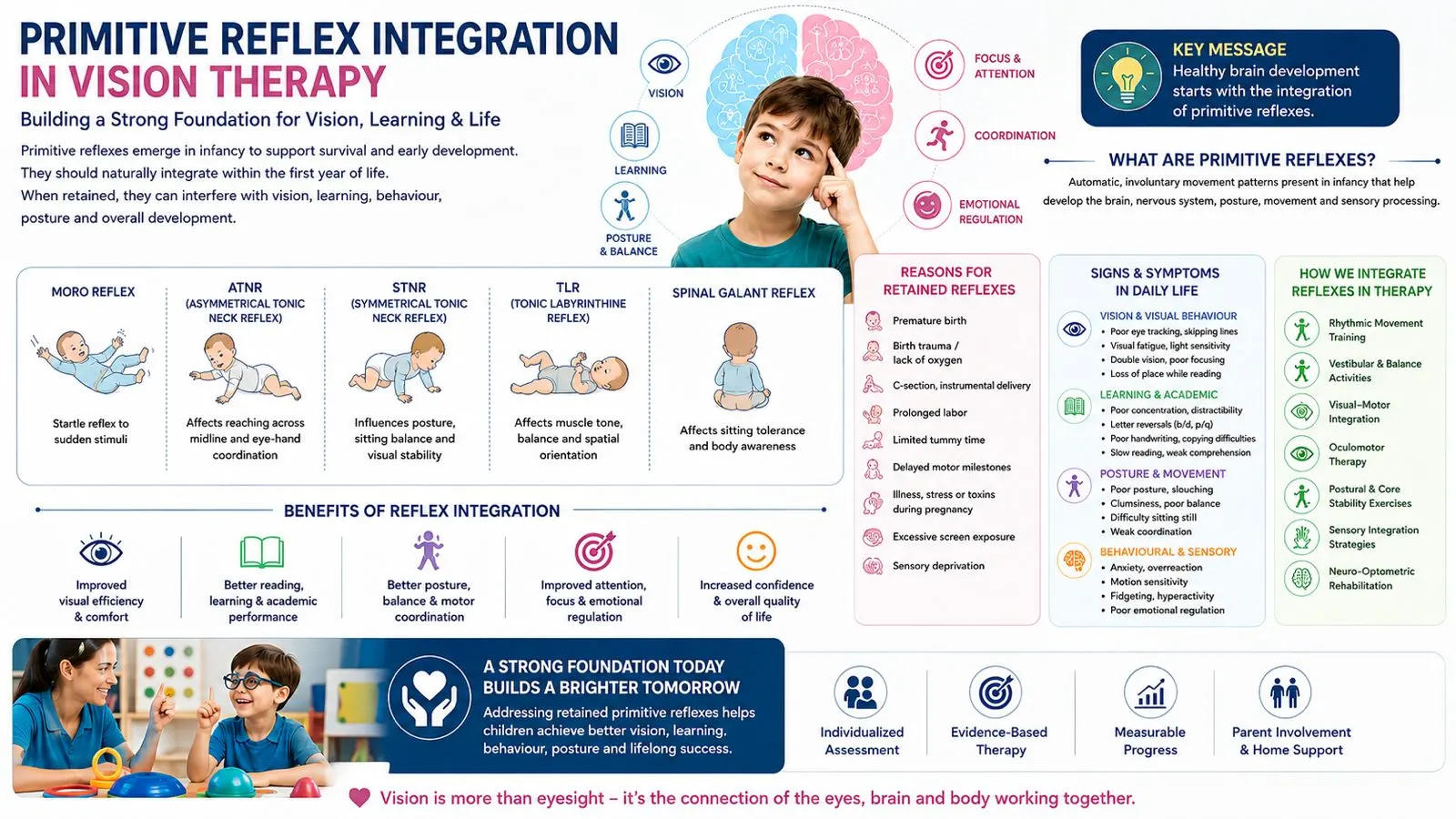
Moro Reflex - The Startle Reflex
The Moro Reflex is an automatic startle response activated by sudden sensory stimulation such as loud sounds, movement, light changes, or unexpected positional shifts. This reflex normally integrates during early infancy as the nervous system matures.
Signs of a Retained Moro Reflex
Children with retained Moro reflexes may demonstrate light sensitivity, sound sensitivity, anxiety and over-reactivity, emotional dysregulation, motion sensitivity, visual overstimulation, poor concentration, and easily distracted behaviour.
Vision-Related Effects of Retained Moro Reflex
Visual symptoms may include difficulty maintaining visual fixation, reduced visual attention span, poor adaptation to visual environments, visual fatigue, and difficulty focusing in busy classrooms.
Asymmetrical Tonic Neck Reflex (ATNR)
The Asymmetrical Tonic Neck Reflex is activated when the head turns to one side, causing extension of the arm and leg on the same side while the opposite side flexes. Retention of ATNR may interfere with bilateral integration and reading development.
Common Signs of Retained ATNR
Children may experience difficulty crossing midline, letter reversals, poor handwriting posture, weak reading fluency, difficulty copying from the board, and poor bilateral coordination.
Visual Implications of Retained ATNR
Visual challenges may include poor eye tracking, binocular instability, loss of place while reading, difficulty maintaining reading alignment, and reduced visual coordination - all of which directly impact learning-related vision function.
Symmetrical Tonic Neck Reflex (STNR)
The STNR assists infants during the developmental transition toward crawling and coordinated movement patterns. When retained, STNR may contribute to postural instability and near-point visual fatigue.
Common Signs of Retained STNR
Children may display slouched posture, difficulty sitting upright, reduced attention during near tasks, poor hand-eye coordination, and restlessness during reading activities.
Visual Effects of Retained STNR
Visual symptoms may include reduced convergence ability, difficulty sustaining near tasks, reading fatigue, poor focusing endurance, and weak visual attention.
Tonic Labyrinthine Reflex (TLR)
The Tonic Labyrinthine Reflex influences balance, muscle tone, posture, and spatial orientation. Retention of TLR may interfere with visual-vestibular integration and body awareness.
Signs of Retained TLR
Children may experience poor balance, clumsiness, motion insecurity, toe walking, reduced postural stability, and fear of movement.
Vision-Related Effects of TLR Retention
Possible visual symptoms include impaired spatial awareness, poor visual motion processing, reduced depth perception, difficulty judging distances, and vestibular visual instability.
Spinal Galant Reflex
The Spinal Galant Reflex responds to stimulation along the spinal region and plays a role in early movement development. When retained, it may contribute to hyperactivity, poor sitting tolerance, and sensory sensitivity.
Common Signs of Retained Spinal Galant Reflex
Children may demonstrate constant fidgeting, difficulty sitting still, sensitivity to clothing, poor sitting endurance, and hyperactivity tendencies.
Visual and Learning Effects
Retained Spinal Galant reflex may contribute to reduced visual attention, difficulty sustaining reading tasks, poor concentration during classroom activities, and increased movement interfering with visual focus.
Signs Parents Should Watch For
Children with retained primitive reflexes often demonstrate symptoms affecting visual performance, learning, posture, and behaviour. Parents who notice several of these signs may benefit from a comprehensive paediatric vision evaluation.
Visual Signs
- Poor eye tracking
- Losing place while reading
- Skipping lines
- Slow reading speed
- Visual fatigue
- Difficulty copying from the board
- Reduced visual attention
Learning and Academic Signs
- Poor concentration
- Attention variability
- Weak handwriting
- Reversal errors
- Slow processing speed
- Difficulty following instructions
Motor and Postural Signs
- Slouched posture
- Poor balance
- Clumsiness
- Toe walking
- Difficulty sitting still
- Delayed coordination
Primitive Reflex Integration During Vision Therapy
At Caring Vision, primitive reflex integration is incorporated into individualised Neuro Optometric Rehabilitation and Vision Therapy programmes. Therapy plans may include:
- Reflex integration exercises
- Oculomotor rehabilitation
- Vestibular therapy
- Binocular vision training
- Visual motor integration
- Sensory integration activities
- Postural stability exercises
Oculomotor Rehabilitation Therapy
Children with retained primitive reflexes frequently demonstrate inefficient eye movement control. Oculomotor rehabilitation within Vision Therapy may focus on improving saccades, pursuits, fixation stability, convergence, accommodation flexibility, and reading eye movements.
Therapy Activities May Include
- Hart chart saccades
- Tracking exercises
- Brock string activities
- Visual scanning drills
- Eye-hand coordination tasks
Vestibular and Sensory Integration Therapy
Vestibular and sensory systems play a major role in visual stability and postural control. Therapy may include balance training, motion desensitisation, head-eye coordination, spatial orientation activities, and sensory regulation strategies. These approaches help improve visual-vestibular integration and reduce neurological overload during visual tasks.
Benefits of Primitive Reflex Integration Therapy
When primitive reflexes become better integrated, children may demonstrate improvements across multiple functional areas.
Visual Benefits
- Improved eye tracking
- Better reading fluency
- Reduced visual fatigue
- Improved focusing ability
- Better visual attention
Learning Benefits
- Improved concentration
- Better academic endurance
- Improved handwriting
- Faster information processing
- Enhanced reading comprehension
Motor and Postural Benefits
- Better balance
- Improved coordination
- Enhanced posture
- Reduced clumsiness
- Better body awareness
Behavioural Benefits
- Improved emotional regulation
- Better sensory tolerance
- Reduced anxiety
- Improved confidence
- Increased frustration tolerance
Importance of Early Identification
Early recognition of retained primitive reflexes is important because neurological inefficiencies may continue affecting learning, posture, visual processing, and attention throughout childhood if left unaddressed.
Children are often mislabelled as lazy, distracted, hyperactive, unmotivated, or poor readers when underlying neurodevelopmental immaturity may actually be contributing to their struggles. Comprehensive developmental vision evaluation can help identify these underlying visual and neurological contributors early.
The Caring Vision Approach to Primitive Reflex Integration
At Caring Vision, our multidisciplinary approach may include Developmental Vision Therapy, Neuro Optometric Rehabilitation, Vestibular Rehabilitation, Binocular Vision Therapy, Sensory Integration Support, Reading Rehabilitation, and parent guidance and home reinforcement strategies.
Each therapy programme is individualised based on detailed clinical assessment and functional visual findings. For patients who have been told their child's eyes appear normal but continue to see functional difficulties, a comprehensive neuro-optometric evaluation is the appropriate next step.
Final Thoughts
Primitive reflexes form an important foundation for neurological, visual, and motor development during infancy. When these reflexes remain retained beyond their expected developmental stage, they may interfere with reading efficiency, eye tracking, posture, attention, balance, coordination, and overall visual comfort.
Through individualised Primitive Reflex Integration Therapy and Neuro Optometric Rehabilitation, many children can improve visual efficiency, academic performance, sensory regulation, and confidence in daily life. At Caring Vision, we believe in addressing the neurological foundations behind visual challenges through evidence-informed developmental vision care and rehabilitation strategies designed to support long-term functional improvement.
Explore More at Caring Vision Therapy
Frequently Asked Questions
What are retained primitive reflexes?
Retained primitive reflexes are infant reflex patterns that remain active beyond early childhood and may interfere with visual, motor, sensory, and learning development.
Can retained primitive reflexes affect reading?
Yes. Retained reflexes may contribute to poor eye tracking, letter reversals, reading fatigue, and reduced visual attention - all of which directly impact reading efficiency.
What is Primitive Reflex Integration Therapy?
Primitive Reflex Integration Therapy involves structured sensory-motor and neurodevelopmental activities designed to support neurological maturation and improve functional performance across visual, motor, and learning domains.
How does Vision Therapy help retained primitive reflexes?
Vision Therapy may help improve eye movement control, binocular coordination, visual processing, vestibular integration, and sensory organisation alongside reflex integration strategies.
Can retained primitive reflexes cause ADHD-like symptoms?
Some children with retained primitive reflexes may demonstrate poor attention, hyperactivity, sensory overload, and emotional dysregulation that resemble ADHD-like behaviours. A thorough developmental vision evaluation can help differentiate these contributors.
What are signs of poor eye tracking in children?
Signs may include losing place while reading, skipping lines, slow reading speed, poor copying skills, and visual fatigue during near tasks.
Is Primitive Reflex Integration scientifically supported?
Research in neurodevelopmental rehabilitation continues to explore the relationship between retained primitive reflexes, sensory processing, motor coordination, and functional learning difficulties. Many clinicians incorporate reflex integration as part of comprehensive developmental rehabilitation.
Can adults have retained primitive reflexes?
Yes. Some retained primitive reflexes may persist into adulthood and contribute to posture, balance, sensory, or visual difficulties. Neuro Optometric Rehabilitation can address these in adults as well as children.