
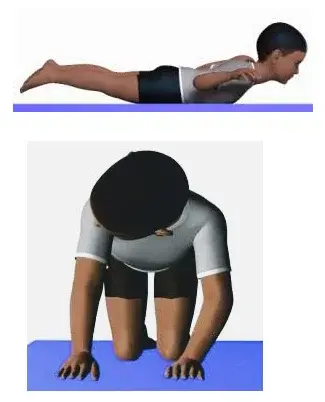
Primitive reflexes are involuntary, automatic movement patterns that are present before birth and during the first months of life. These reflex patterns serve critical functions in early development, including supporting foetal positioning in the womb, regulating breathing and feeding after birth, and providing the framework for early motor milestones. Under normal developmental circumstances, primitive reflexes are gradually inhibited and integrated by higher brain structures during the first year of life as the central nervous system matures and voluntary motor control develops. When this integration process completes successfully, it establishes the neurological foundation for coordinated voluntary movement, postural stability, balanced sensory processing, and efficient learning.
When primitive reflexes are not fully integrated, a condition referred to as retained or persistent primitive reflexes, they can interfere with the development of higher neurological functions and voluntary cortical control. Retained reflexes create a pattern where primitive movement responses continue to be triggered by ordinary stimuli, competing with the controlled, purposeful movement and sustained attention needed for complex tasks such as sitting still in a classroom, reading across a page, writing fluently, and coordinating physical activity. The presence of retained primitive reflexes in children is associated with a wide range of developmental, learning, sensory, and behavioural challenges, and it can persist unrecognised into adulthood as a contributor to ongoing functional difficulties.
The specific ways in which retained primitive reflexes affect visual function and learning are clinically important and frequently overlooked. The Asymmetrical Tonic Neck Reflex (ATNR), when retained, creates an involuntary linkage between head rotation and arm and hand movement that directly interferes with writing across the page, reading across the visual midline, and producing stable visual tracking from left to right. The Moro Reflex, when retained beyond early infancy, creates hypersensitivity to sudden stimulation, including light, visual movement, and environmental change, which can manifest as light sensitivity, startle responses to visual stimuli, visual stress, and difficulty in visually busy or unpredictable environments. The Tonic Labyrinthine Reflex (TLR) affects postural tone, balance, and spatial orientation in ways that directly impair the visual-vestibular integration required for stable visual fixation, smooth reading, and moving around with confidence. Other retained reflexes including the Symmetrical Tonic Neck Reflex (STNR) and the Spinal Galant Reflex have documented effects on sitting posture, attention, fidgeting, concentration, and the quality of reading eye movements in children of school age.
Identification of retained primitive reflexes requires a specialist neurological and visual assessment that tests for the presence and strength of specific reflex patterns under controlled conditions. At Caring Vision Therapy in Chennai, assessment of primitive reflex status is integrated into the full functional vision evaluation for children presenting with learning difficulties, poor reading or writing performance, coordination problems, sensory hypersensitivity, attention difficulties, or unexplained developmental concerns. This integrated assessment allows our FCOVD/FOVDR certified specialists to determine whether retained reflexes are contributing to the visual and learning difficulties identified and to design a treatment programme that addresses both the visual and neurological dimensions of the child's presentation.
Primitive reflex integration therapy at Caring Vision Therapy uses specific, repetitive movement-based exercises designed to inhibit retained reflex patterns and promote the development of the higher neurological control that the retained reflex has been suppressing. These exercises are progressive and are practiced both in the clinic and as part of a structured home programme that parents carry out with the child between clinic sessions. Integration of primitive reflexes through targeted movement-based therapy typically produces improvements in postural stability, bilateral coordination, reading eye movement control, sensory tolerance, handwriting quality, the ability to sit comfortably and concentrate during learning tasks, and overall visual processing efficiency.
Primitive reflex integration at Caring Vision Therapy is always delivered as part of a thorough, coordinated vision therapy programme and not as an isolated intervention. The combination of reflex integration exercises with structured vision therapy for eye tracking, binocular vision, and visual processing produces synergistic outcomes that are greater than either approach delivered alone. For many children, identifying and treating retained primitive reflexes represents the missing component that explains why previous interventions for learning or developmental difficulties have not produced the expected results.
If your child struggles with coordination, reading, handwriting, sitting still, sensory sensitivity, or attention, and has not yet had a full functional vision evaluation that includes assessment of primitive reflex status, contact Caring Vision Therapy in Chennai or Hyderabad to arrange a specialist assessment. Our team will identify whether retained primitive reflexes are contributing to your child's difficulties and design a personalised programme to address them as part of a complete vision therapy plan.
Related Reading