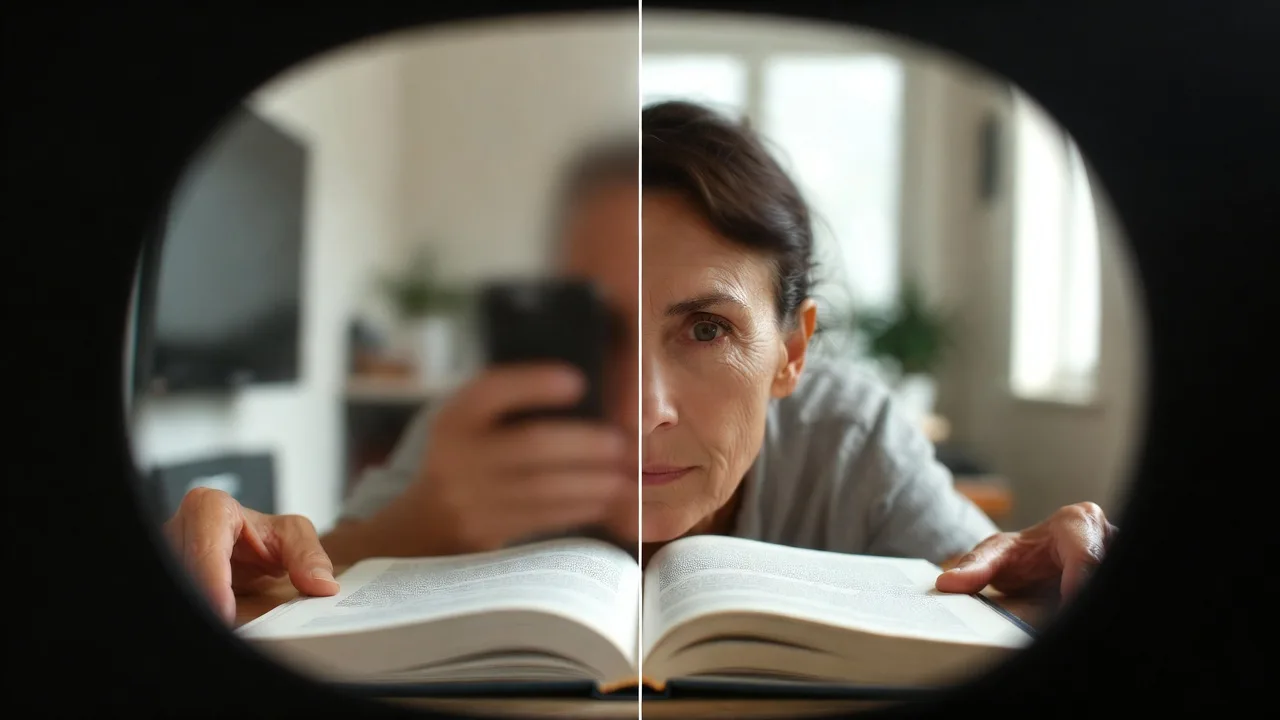
Low vision is defined as a visual impairment that cannot be fully corrected by standard glasses, contact lenses, medication, or surgery, and that limits the ability to perform daily tasks such as reading, recognising faces, watching television, getting around independently, or pursuing education and professional work. Individuals with low vision retain some functional vision, which distinguishes the condition from total blindness, but the remaining vision is insufficient for normal visual function without specialist support and adaptive strategies. Low vision is a significant and growing public health challenge in India, where conditions including diabetic retinopathy, age-related macular degeneration, glaucoma, genetic eye diseases, and congenital visual impairment affect millions of individuals across all age groups and socioeconomic backgrounds.
The most common causes of low vision in India include age-related macular degeneration, which damages the central vision used for reading and fine detail work while leaving peripheral vision relatively intact, diabetic retinopathy, which affects peripheral and central vision in individuals whose blood sugar has been inadequately controlled over time, glaucoma, which progressively damages peripheral visual field and can lead to significant functional restriction of spatial awareness and mobility, congenital conditions such as albinism, nystagmus, optic nerve hypoplasia, and coloboma, retinal dystrophies and inherited degenerations including retinitis pigmentosa, and conditions caused by traumatic injury, infection, nutritional deficiency, or vascular events. Many individuals in India with low vision have never received formal low vision rehabilitation and are not aware of the adaptive tools, optical devices, and training strategies that could significantly improve their functional independence and quality of life.
The distinction between a clinical eye examination and a functional low vision evaluation is important and frequently misunderstood. A clinical examination determines the cause and severity of the underlying eye condition and determines whether any medical or surgical intervention is indicated or possible. A functional low vision evaluation, conducted by a low vision rehabilitation specialist, assesses how the individual is using their remaining vision, identifies what visual tasks the person needs or wants to perform in their daily life, and determines what combination of optical aids, adaptive training, and environmental modifications will help them perform those tasks most effectively. Both types of evaluation are important, and they serve complementary purposes.
At Caring Vision Therapy in Chennai, low vision rehabilitation begins with a full functional assessment that identifies the individual's specific visual profile, their priority tasks and personal goals, and the optical and adaptive solutions most likely to help them achieve meaningful independence. The evaluation includes detailed measurement of visual acuity at near and distance across multiple contrast levels, contrast sensitivity, visual field extent and sensitivity, and, for patients with central vision loss, assessment of the potential for developing eccentric viewing techniques using remaining peripheral vision.
Prescription of appropriate optical aids is a core component of low vision rehabilitation. Aids prescribed at Caring Vision Therapy may include hand-held and stand magnifiers for near tasks such as reading correspondence, medication labels, and printed materials, telescopic systems for distance tasks such as watching television, identifying faces, reading destination signs, or accessing information in public environments, electronic magnification devices including portable video magnifiers and desktop closed-circuit television systems for extended near tasks, anti-glare filters, coloured overlays, and tinted lenses to manage light sensitivity and improve contrast perception, and orientation and mobility aids so patients can move about safely, confidently and independently in familiar and unfamiliar places.
Low vision rehabilitation at Caring Vision Therapy extends significantly beyond the prescription of aids to include structured training in how to use them effectively and how to adapt everyday tasks and environments to make best use of remaining vision. Many individuals who are prescribed magnifiers do not receive adequate instruction in correct positioning, optimal lighting, or the eccentric viewing technique required to use peripheral vision when central vision is lost. Training in adaptive visual strategies, combined with appropriate optical prescription, consistently produces better functional outcomes than the prescription of aids alone.
The goal of low vision rehabilitation at Caring Vision Therapy is not to restore vision that has been lost, which is not possible, but to help each individual maximise the vision they retain and maintain independence, participation, and quality of life in the activities that matter most to them. This may mean reading independently, using a smartphone or tablet, preparing meals safely, continuing in a chosen profession, or participating in education. Programmes are completely individualised, goal-focused, and delivered with respect for the autonomy, priorities, and life circumstances of each patient.
If you or a family member has been told that nothing more can be done medically for a visual condition, low vision rehabilitation at Caring Vision Therapy in Chennai may offer practical strategies, clinical tools, and structured training that significantly improve functional independence and daily quality of life. Contact our clinic to arrange a specialist low vision assessment and begin exploring the options available to you.
Related Reading