Visual symptoms in autism (ASD): light sensitivity, visual processing difficulty, eye contact challenges and sensory overload.
Book a ConsultationWhat Visual Symptoms Are Associated with Autism Spectrum Disorder?
Visual symptoms in autism (ASD): light sensitivity, visual processing difficulty, eye contact challenges and sensory overload.
Autism Spectrum Disorder (ASD) is commonly associated with differences in communication, social interaction, behavior, and sensory processing. However, one area that is often overlooked is the significant impact autism can have on vision and visual processing.
At Caring Vision, we frequently work with children and adults who experience visual challenges associated with Autism Spectrum Disorder. Understanding these visual symptoms can help parents, educators, therapists, and healthcare professionals provide better support and improve everyday functioning.
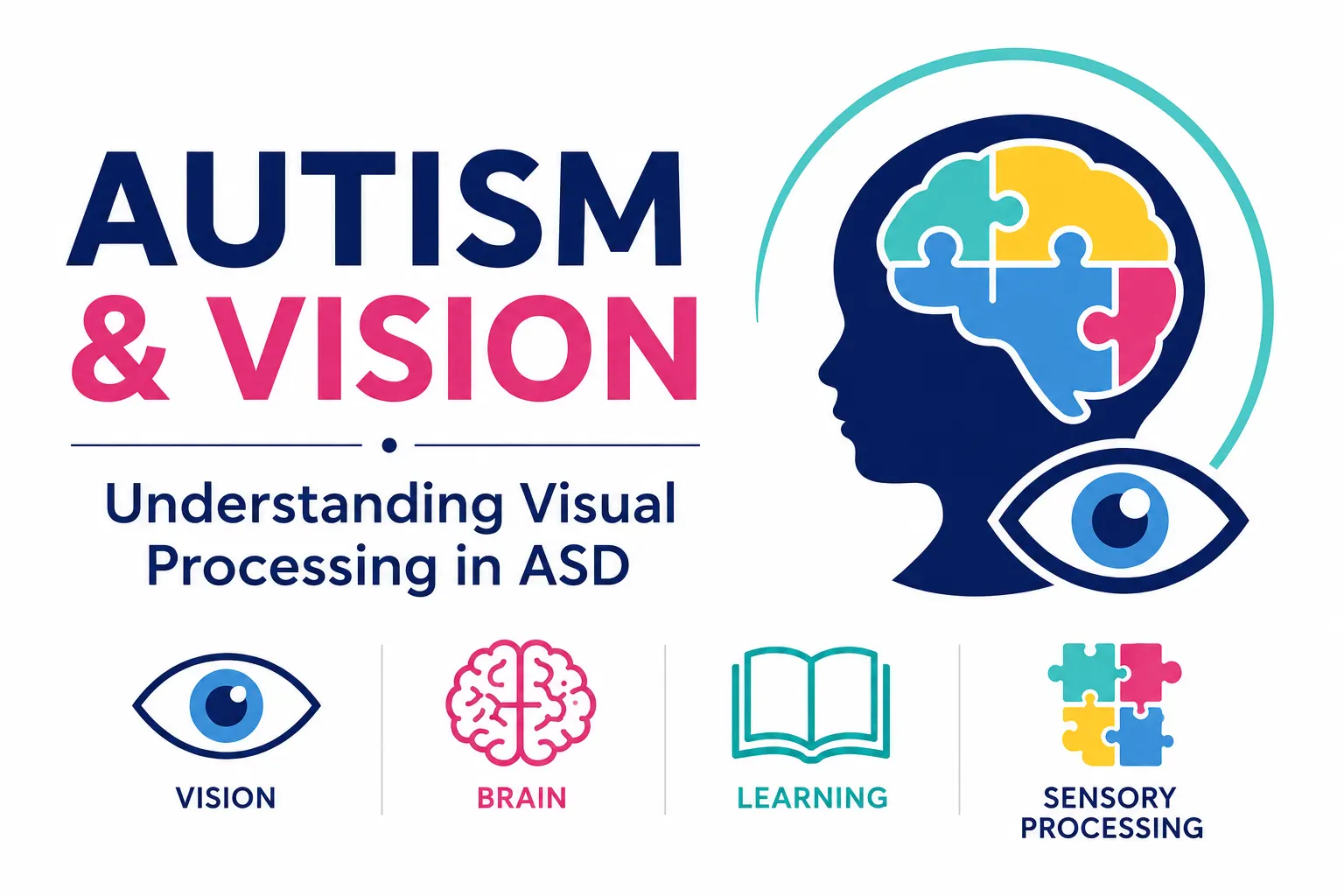
While many individuals with autism have healthy eyes and normal visual acuity, they may still experience difficulties with how the brain interprets, organizes, and responds to visual information.
What Is Autism Spectrum Disorder (ASD)?
Autism Spectrum Disorder is a neurodevelopmental condition that affects how individuals perceive, process, and interact with information from their environment. Every individual with autism is unique. However, many experience differences in sensory processing, including visual, auditory, tactile, vestibular, and proprioceptive systems.
Research suggests that visual symptoms in individuals with ASD are often more frequent, more intense, more persistent, and more functionally significant than those observed in typically developing individuals.
Common Visual Symptoms in Autism
Individuals with ASD may experience a wide range of visual symptoms that affect learning, attention, comfort, mobility, and social interaction.
Light Sensitivity (Photosensitivity)
Many children and adults with autism demonstrate increased sensitivity to bright sunlight, fluorescent lighting, LED lights, flickering screens, and glare from reflective surfaces. Common signs include squinting frequently, covering the eyes, avoiding bright environments, increased anxiety under certain lighting conditions, and complaints of visual discomfort. For some individuals, visually stimulating environments can become overwhelming and exhausting.
Poor Eye Contact and Gaze Aversion
Reduced eye contact is one of the most recognized characteristics associated with autism. However, avoiding eye contact does not necessarily indicate disinterest or social withdrawal. For many individuals with ASD, direct eye contact may be overwhelming because of the increased amount of visual and social information that must be processed simultaneously. This may lead to looking away during conversation, brief eye contact, difficulty maintaining gaze, and increased anxiety during face-to-face interactions.
Lateral Viewing (Looking Out of the Corner of the Eye)
Some children with autism tilt their head or look at objects from the side rather than directly: a behavior commonly referred to as lateral viewing. Parents may notice their child looking at toys from unusual angles, tilting the head frequently, viewing objects through peripheral vision, or moving close to objects before observing them. This may represent an alternative strategy for processing visual information more comfortably.
Fascination with Lights, Patterns, and Movement
Many children with autism demonstrate intense visual interest in spinning objects, ceiling fans, reflections, shadows, rotating toys, and moving patterns. Parents often report prolonged visual fixation on these objects. These behaviors may reflect differences in visual attention, sensory regulation, and motion processing.
Color Sensitivities
Certain colors may appear unusually intense or uncomfortable for individuals with autism. Some children may prefer specific colors, avoid particular colors, become distressed in certain visual environments, or demonstrate strong emotional responses to color changes. Research suggests that color sensitivities may be associated with neurological differences in sensory processing and integration.
Visual Overload and Hyperfocus
Many individuals with ASD experience difficulty filtering unnecessary visual information. Visually overwhelming environments may include crowded classrooms, shopping centers, busy playgrounds, traffic intersections, and visually cluttered rooms. At the same time, some individuals may become intensely focused on a single object while ignoring surrounding visual information. This combination of visual overload and hyperfocus can significantly affect learning and daily functioning.
Visual Processing Challenges in Autism
Vision is much more than seeing clearly. The brain must accurately interpret, organize, prioritize, and respond to visual information. Individuals with ASD may experience difficulties in several areas of visual processing.
Visual-Spatial Processing Difficulties
Visual-spatial processing helps us understand position, distance, direction, movement, body awareness, and spatial relationships. Challenges may include poor body awareness, difficulty judging distances, clumsiness, bumping into objects, and difficulty finding their way around unfamiliar places.
Visual-Motor Integration Difficulties
Visual-motor integration involves coordinating visual input with body movement. Difficulties may affect handwriting, drawing, sports participation, eye-hand coordination, and catching and throwing activities, sometimes despite having normal eyesight.
Face Recognition and Social Vision
Research has shown that many individuals with autism process faces differently. They may focus less on the eyes, rely more on mouth movements, take longer to interpret facial expressions, and have difficulty recognizing emotions. These differences may impact social communication, relationship building, classroom interactions, and emotional understanding.
Why Do These Visual Symptoms Occur?
Autism affects multiple areas of the brain responsible for sensory processing and integration. Differences involving visual perception, eye movement control, sensory integration, visual attention, motion processing, spatial awareness, and visual filtering may contribute to the visual symptoms commonly observed in ASD. Importantly, these symptoms are not behavioral choices. They are often the result of neurological differences in how visual information is processed and interpreted.
The Role of Developmental Optometry and Vision Therapy
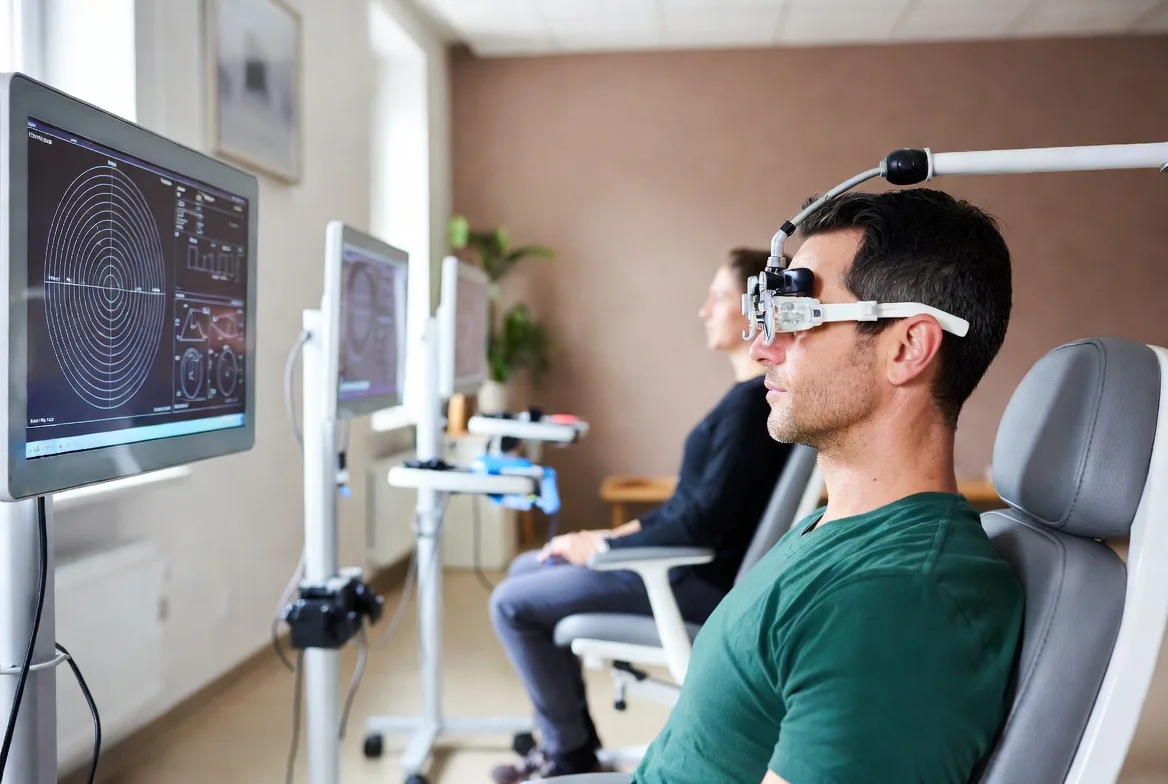
A full developmental vision evaluation can identify functional visual challenges that may not be detected during a routine eye examination. At Caring Vision, assessments may include evaluation of eye tracking, binocular vision, visual attention, visual-spatial skills, visual-motor integration, accommodation and focusing, sensory-visual processing, and functional visual performance.
Vision Therapy for Autism
When clinically appropriate, individualized Vision Therapy programs may help improve eye movement control, visual attention, eye teaming, spatial awareness, eye-hand coordination, visual comfort, and functional visual performance. Vision Therapy is often most effective when integrated into a multidisciplinary approach involving occupational therapists, speech therapists, behavioral therapists, educators, caregivers, and developmental specialists.
Signs Parents Should Watch For
Consider a developmental vision assessment if your child frequently avoids eye contact, looks out of the corner of the eyes, is highly sensitive to light, becomes fascinated with spinning objects, walks on tiptoes, frequently flaps hands near the face, has poor spatial awareness, struggles with visual attention, appears overwhelmed in visually busy environments, or has difficulty with reading, handwriting, or coordination.
Benefits of Early Identification
Early recognition of visual processing difficulties may help improve visual comfort, enhance attention, support learning readiness, improve eye-hand coordination, reduce visual frustration, and enhance confidence and participation. Early intervention allows children to develop stronger visual foundations that support academic and daily life skills.
Final Thoughts
Visual symptoms in Autism Spectrum Disorder are real, common, and frequently misunderstood. A child may see clearly on a standard eye chart yet still experience significant challenges with how the brain processes visual information.
By identifying visual processing difficulties early, families can better understand their child's needs and access appropriate support strategies. Through full developmental vision evaluation and individualized intervention, many children with ASD can improve visual comfort, functional performance, attention, learning readiness, and overall quality of life.
At Caring Vision, we are committed to helping children and families better understand the connection between vision, sensory processing, and neurodevelopment. Book a developmental vision assessment to learn how we can help.
Explore More at Caring Vision Therapy
Frequently Asked Questions
Can autism affect vision?
Yes. Autism may affect how visual information is processed, interpreted, and integrated, even when eyesight is normal.
Why do children with autism avoid eye contact?
For some individuals, direct eye contact can be overwhelming because of increased visual and social processing demands.
Is light sensitivity common in autism?
Yes. Many individuals with ASD experience increased sensitivity to bright lights, glare, and visually stimulating environments.
What is lateral viewing in autism?
Lateral viewing refers to looking at objects from the side or through peripheral vision instead of direct fixation.
Can Vision Therapy help children with autism?
In some cases, Vision Therapy may help improve eye movement control, visual attention, visual comfort, and functional visual skills when clinically appropriate.
What visual symptoms are common in Autism Spectrum Disorder?
Common symptoms may include light sensitivity, poor eye contact, visual overload, spatial awareness difficulties, visual attention problems, and eye movement challenges.