Clinician-recommended eye exercises for children: pencil push-ups, Brock string, tracking drills and vision games, plus when to seek help.
Book a ConsultationWhat Are the Most Effective Eye Exercises for Children?
Clinician-recommended eye exercises for children: pencil push-ups, Brock string, tracking drills and vision games, plus when to seek help.
Related Resources
Can Eye Exercises Help Children's Vision?
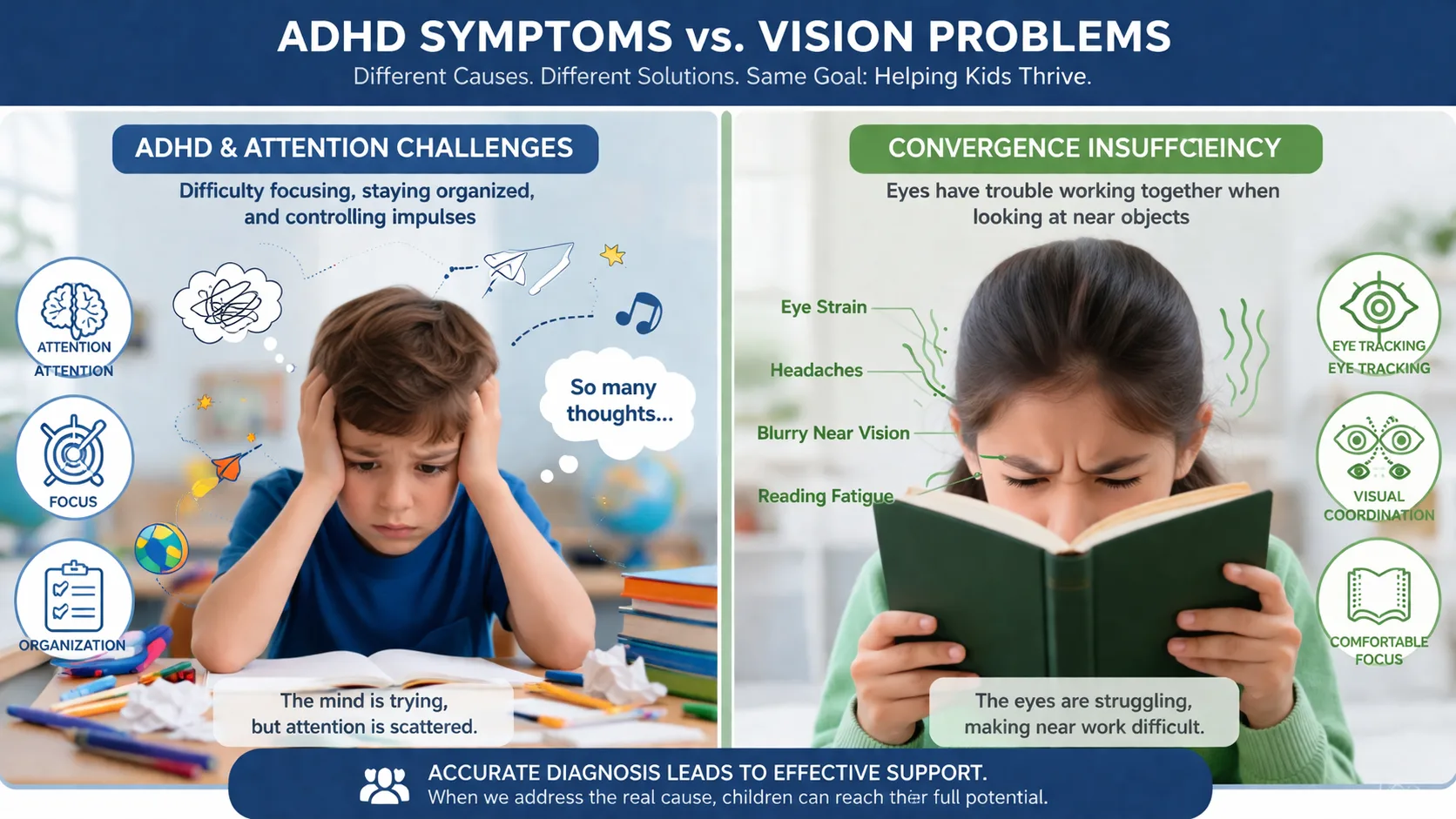
Yes! Structured eye exercises can significantly help children develop better eye coordination, tracking ability, and visual processing skills. While eye exercises alone cannot correct refractive errors (needing glasses), they're highly effective for functional vision problems like convergence insufficiency, poor eye tracking, and coordination issues. Many children benefit from both home-based exercises and professional vision therapy.
Effective Home Eye Exercises for Children
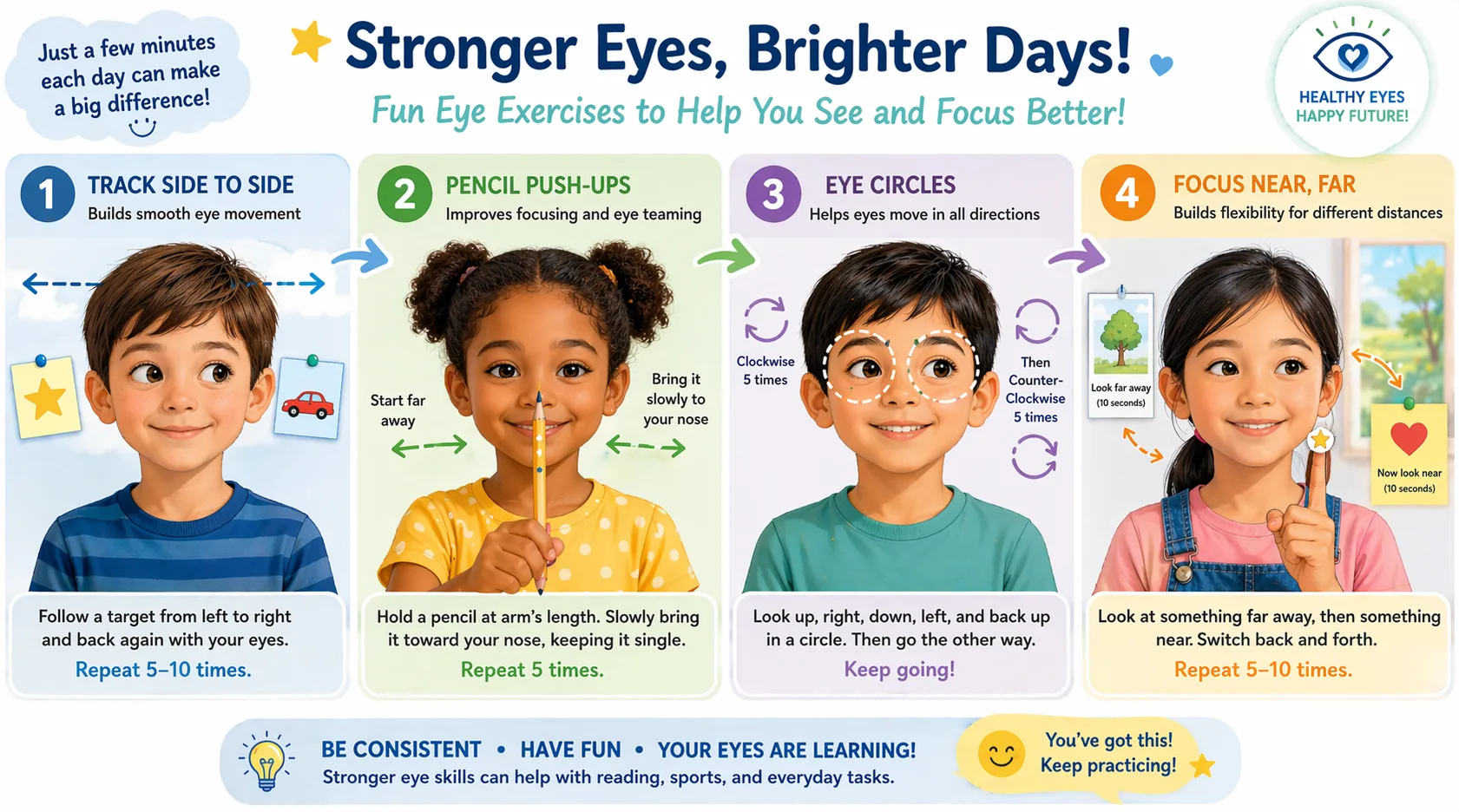
1. Pencil Push-Ups for Convergence
This simple but powerful exercise trains the eyes to work together when focusing near.
- Hold a pencil at arm's length with the sharp point aimed at your child's face
- Child keeps focus on the tip while you slowly move it toward the bridge of the nose
- Stop when the child sees two images (just before double vision)
- Repeat 10-15 times, 3-4 times weekly
- Duration: 2-3 weeks for initial improvement
2. Brock String Exercise for Binocular Alignment
This classic vision therapy exercise trains eye alignment and focusing.
- Tie beads on a string at 6-inch intervals
- Hold one end against child's nose, other end held by you at arm's length
- Child focuses on individual beads while you hold the string
- The string appears to make an X at the focused bead
- Gradually increase distance and focus on beads farther away
- Practice 5-10 minutes daily
3. Eye Tracking with Target
Improve eye tracking ability and smooth pursuit movements.
- Create a small target (finger, pen tip, or small toy)
- Move the target slowly in patterns (circles, figure-8, horizontal lines)
- Child follows with eyes only (no head movement)
- Start slow, gradually increase speed
- Practice 5-10 minutes, 3-4 times weekly
4. Near-Far Focusing Switch
Build accommodation (focusing at changing distances).
- Hold target close to child's face (2-3 inches)
- Child focuses on it clearly
- Suddenly move target to arm's length
- Child refocuses on distant point
- Alternate between near and far on your command
- Repeat 15-20 times, 2-3 times weekly
5. Letter Tracking on Page
Simulates reading and improves eye tracking for academic success.
- Have child use a pencil to follow along while reading
- Gradually increase reading speed while maintaining accuracy
- Monitor for line skipping or losing place
- Practice 10-15 minutes daily during reading time
6. Ball Catch and Coordination
Develops hand-eye coordination and visual-motor integration.
- Toss a soft ball for child to catch
- Gradually increase distance and vary tossing patterns
- Include one-handed catches, moving catches
- Play 15-20 minutes, 3-4 times weekly
When Should You Do Eye Exercises with Your Child?
- Best performed when child is alert and focused
- Early morning or early evening often works well
- Keep sessions enjoyable and game-like
- Stop if child shows fatigue or discomfort
- Consistency matters more than duration
Important Limitations of Home Eye Exercises
While home exercises support visual development, they cannot replace professional vision therapy evaluation:
- Cannot diagnose underlying vision problems
- Lack the specialized equipment and progression used in clinical therapy
- May be ineffective if the underlying condition isn't properly diagnosed
- Professional therapy includes objective progress monitoring
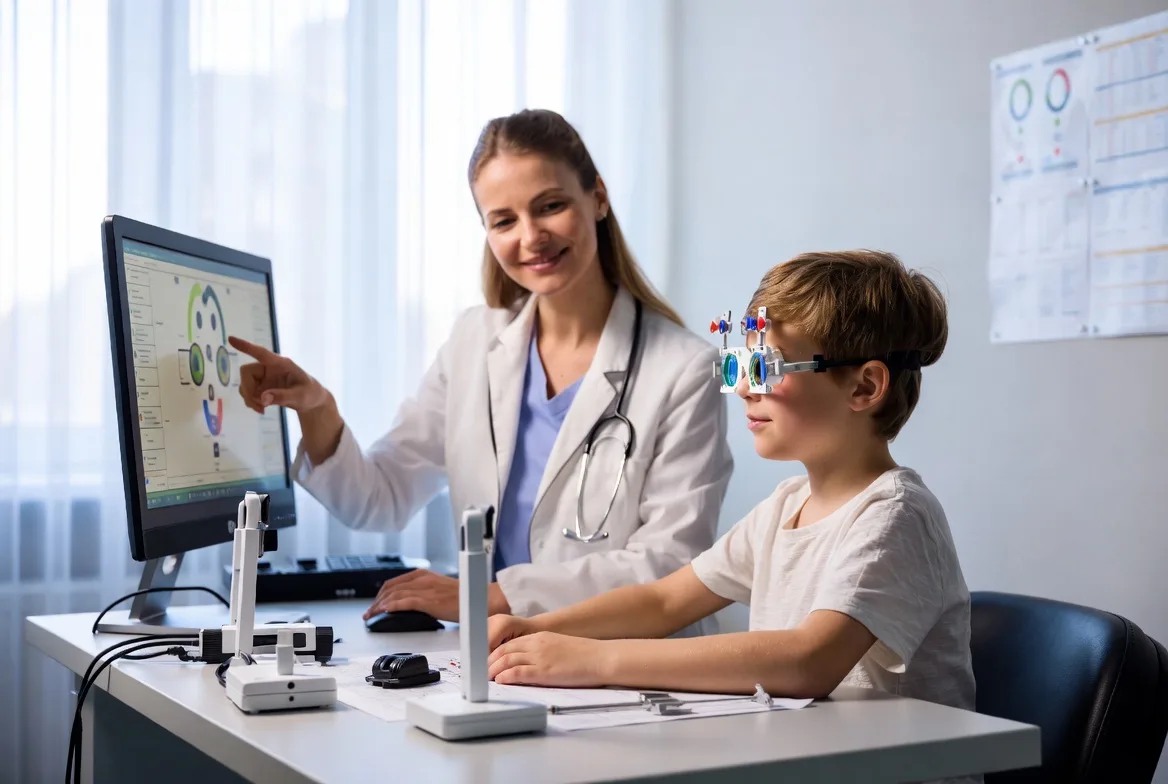
If your child shows signs of vision problems, a full functional vision evaluation should be the first step. Home exercises can then supplement professional care.
Explore More at Caring Vision Therapy
Frequently Asked Questions
Do eye exercises really work for children?
Yes, when addressing functional vision problems like convergence insufficiency and poor tracking. However, they cannot correct refractive errors (needing glasses) or replace professional evaluation. Consistency is key for results.
How long until eye exercises show results?
Most children show initial improvements within 2-3 weeks of consistent daily exercises (5-10 minutes). Significant gains typically appear within 4-8 weeks of regular practice.
Can eye exercises replace glasses?
No. Eye exercises cannot reduce myopia, hyperopia, or astigmatism requiring glasses. They complement glasses by improving eye coordination and processing. For functional vision problems, they're excellent safe training tools.
What age can children start eye exercises?
Children as young as 3-4 years can perform basic exercises like tracking and Brock string work. Younger children do better with game-based activities. Always ensure exercises are age-appropriate and enjoyable.
Are eye exercises safe for kids?
Yes, properly performed eye exercises are completely safe with no side effects. They're non-invasive activities. If your child experiences discomfort or fatigue, stop and consult a vision specialist.