Discover how visual dyslexia affects reading, eye tracking, visual processing, and learning. Learn how developmental vision therapy can improve reading fluency and visual efficiency.
Book a ConsultationWhat Is Visual Dyslexia?
Discover how visual dyslexia affects reading, eye tracking, visual processing, and learning. Learn how developmental vision therapy can improve reading fluency and visual efficiency.
Reading is one of the most sophisticated processes performed by the human brain. Successful reading requires seamless integration between eye movements, visual processing, attention systems, memory networks, language centers, and higher-level cognitive functions.
While dyslexia is commonly recognized as a language-based learning disorder, growing research in neuro-optometry and visual neuroscience highlights that many children and adults with reading difficulties also experience significant neuro-visual processing challenges.
Visual dyslexia refers to visual inefficiencies that interfere with reading performance, fluency, comprehension, and academic success. These visual difficulties may coexist with traditional dyslexia or independently contribute to reading struggles.
Understanding the Neurobiology of Reading
Reading is not an innate human ability. The brain must develop specialized neural pathways to process written language efficiently. During reading, the visual system must maintain stable fixation, execute accurate eye movements, coordinate both eyes efficiently, sustain clear focus, process visual information rapidly, and integrate visual input with language processing. Even small disruptions can negatively affect reading efficiency.
What Is Visual Dyslexia?
Visual dyslexia is more than letter reversals or reading words backward. It may involve challenges related to:
- Eye movement control
- Binocular vision
- Focusing ability
- Visual attention
- Visual perception
- Spatial awareness
- Visual sequencing
- Visual memory
- Sensory-motor integration
Many individuals with visual dyslexia have normal intelligence and perform well in other cognitive tasks but continue to struggle with reading fluency and comprehension. Importantly, standard eye exams may not detect these functional visual issues.
Common Signs and Symptoms of Visual Dyslexia
Oculomotor Dysfunction
Efficient reading requires precise eye movement control. Children may experience:
- Poor tracking ability
- Losing their place while reading
- Skipping words or lines
- Re-reading sentences repeatedly
- Slow reading speed
- Excessive head movement
- Reduced fixation stability
These issues increase reading effort and mental fatigue.
Binocular Vision Dysfunction
Both eyes must work together as a coordinated team. Common symptoms include:
- Convergence insufficiency
- Eye strain while reading
- Intermittent double vision
- Headaches during near tasks
- Visual fatigue
- Difficulty sustaining reading
Children often avoid reading because it feels uncomfortable.
Accommodative Dysfunction
Accommodation is the eye's ability to maintain clear focus during near work. Common signs include blurred vision while reading, poor focusing flexibility, difficulty shifting focus between distances, near-point fatigue, and reduced concentration. These issues can significantly affect reading endurance.
Visual Perceptual Deficits
Visual perception allows the brain to interpret visual information accurately. Children may demonstrate:
- Letter reversals
- Symbol confusion
- Poor visual discrimination
- Weak visual memory
- Difficulty recognizing word patterns
- Spatial orientation difficulties
- Left-right confusion
Magnocellular Visual Processing Challenges
Difficulties within the magnocellular visual pathway may contribute to moving or shimmering text, tracking problems, visual crowding, reduced reading fluency, and visual motion sensitivity.
Visual Attention and Crowding Deficits
Visual crowding occurs when surrounding letters or words interfere with reading. Children may experience difficulty reading dense text, missing words, reduced scanning efficiency, poor sustained visual attention, and increased reading effort.
Primitive Reflex Retention and Reading Difficulties
Retained primitive reflexes including ATNR, STNR, Moro Reflex, and TLR can interfere with eye tracking, midline crossing, postural stability, visual attention, bilateral coordination, and reading posture. Primitive reflex integration often forms part of a developmental rehabilitation program.
Comprehensive Assessment for Visual Dyslexia
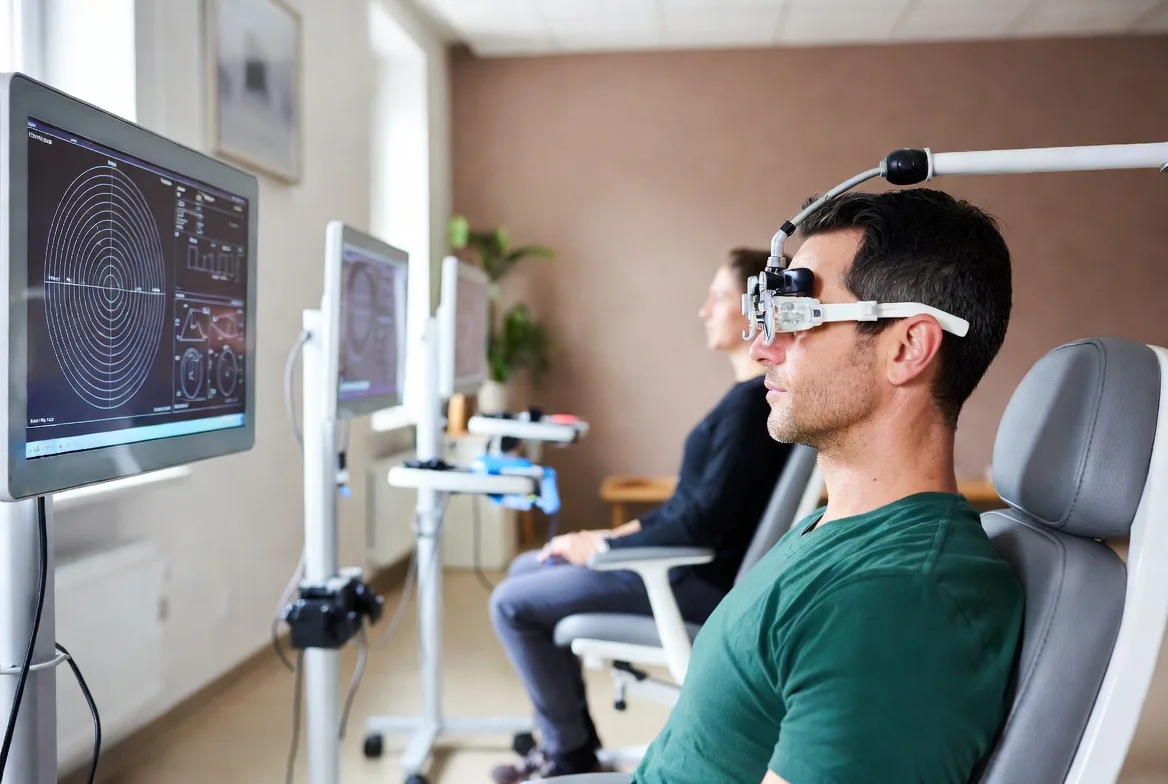
Routine eye examinations typically focus on eyesight and eye health. A comprehensive neuro-optometric evaluation may include oculomotor assessment, eye tracking analysis, binocular vision testing, convergence evaluation, accommodation testing, visual perception assessment, visual-motor integration testing, primitive reflex screening, and reading efficiency analysis. These evaluations help identify hidden visual barriers affecting academic performance.
How Vision Therapy Can Help
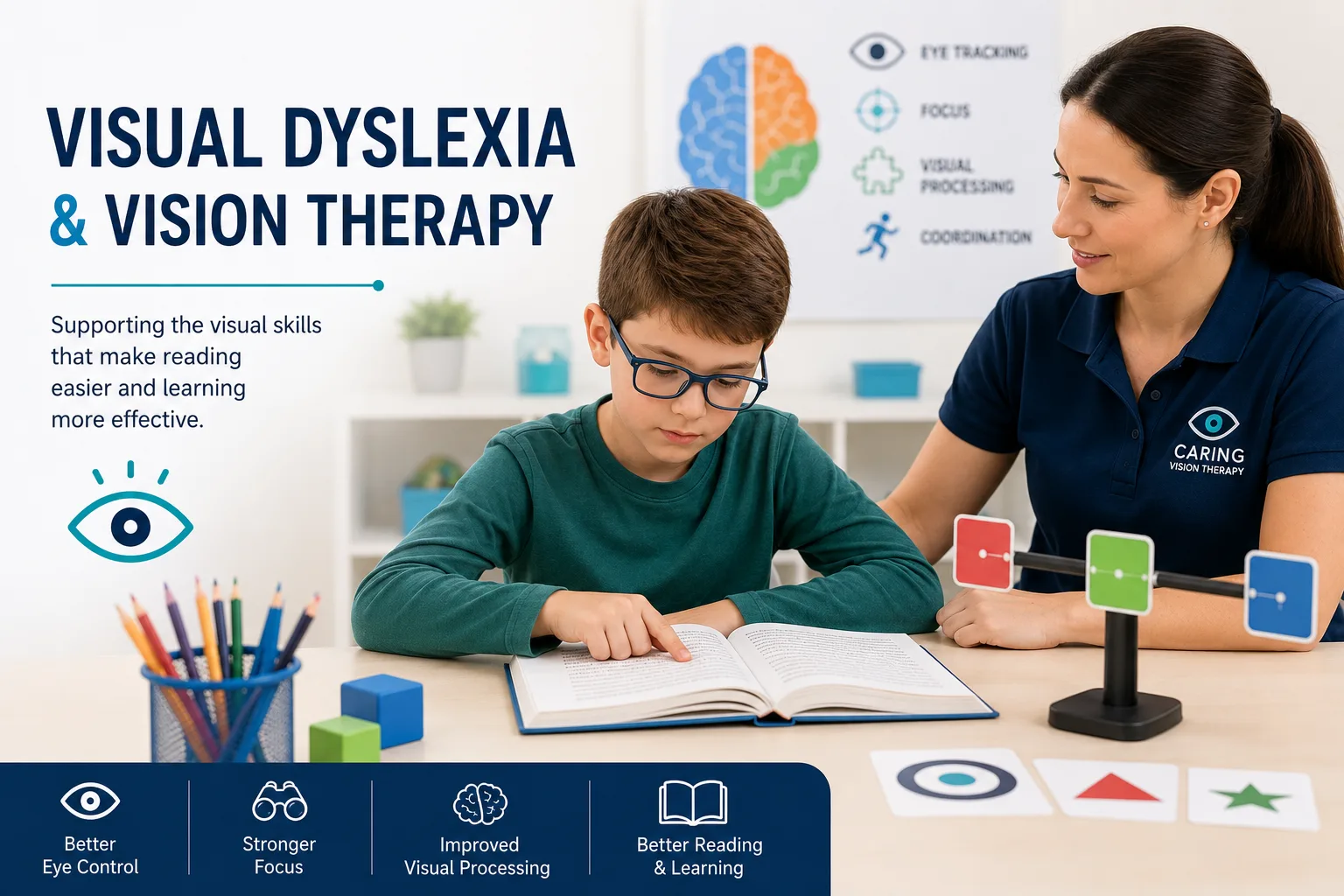
Vision Therapy is a structured neuro-optometric rehabilitation program designed to improve the efficiency and coordination of the visual system. The goal is not simply strengthening eye muscles but enhancing neurological integration and visual processing performance.
Potential benefits include:
- Improved reading fluency
- Better eye tracking
- Enhanced binocular coordination
- Improved visual attention
- Increased reading endurance
- Better visual memory
- Improved spatial awareness
- Enhanced academic performance
Multi-Stage Vision Therapy Approach
Stage 1: Functional Vision Stabilization
Focus areas include visual attention, fixation stability, sensory regulation, primitive reflex integration, and postural organization.
Stage 2: Oculomotor and Binocular Rehabilitation
Focus areas include eye tracking, saccades and pursuits, convergence training, fusional vergence development, and accommodation flexibility.
Stage 3: Visual Perceptual Development
Focus areas include visual discrimination, visual memory, spatial awareness, pattern recognition, sequential processing, and figure-ground skills.
Stage 4: Functional Reading and Academic Integration
Focus areas include reading fluency training, hand-eye coordination, visual-cognitive integration, academic task performance, and visual-auditory integration.
Neuroplasticity and Functional Rehabilitation
The brain possesses remarkable neuroplasticity, allowing it to adapt and strengthen visual processing pathways through structured therapeutic intervention. Families often report improvements in reading fluency, tracking stability, reading comprehension, attention span, handwriting, classroom participation, visual confidence, and learning engagement.
Vision Therapy is most effective when integrated into a multidisciplinary support plan.
Important Clinical Considerations
It is important to understand that dyslexia is a multifactorial condition, visual dysfunction is not the sole cause of dyslexia, and Vision Therapy does not cure dyslexia. Vision Therapy addresses visual barriers that interfere with reading efficiency. A collaborative approach involving educators, therapists, and developmental specialists often produces the best outcomes.
If your child struggles with reading, eye tracking, visual attention, or learning performance, a comprehensive neuro-optometric evaluation may help identify underlying visual challenges. Learn more about learning-related vision problems and how vision therapy can support your child's reading development.
Explore More at Caring Vision Therapy
Frequently Asked Questions
Can a child have dyslexia and visual processing difficulties together?
Yes. Many children experience both phonological and visual processing challenges simultaneously. A comprehensive neuro-optometric evaluation helps identify the visual component so it can be addressed alongside other interventions.
Will Vision Therapy cure dyslexia?
No. Vision Therapy addresses functional visual deficits that may contribute to reading difficulties but does not cure dyslexia. It is most effective as part of a multidisciplinary approach that also addresses phonological and language processing.
How do I know if my child has visual dyslexia?
Common signs include losing place while reading, skipping lines, visual fatigue, headaches during reading, poor tracking, slow reading speed, letter reversals, and reduced reading endurance. A specialized neuro-optometric assessment is needed for accurate diagnosis.
Can a regular eye exam detect visual dyslexia?
Not usually. Routine eye exams check visual acuity and eye health but do not evaluate functional visual skills like eye tracking, binocular coordination, convergence, and visual processing. Specialized neuro-optometric assessments are required to identify these deficits.